
Kabaddi: From Village Mud to the Global Arena
कबड्डी क्या है? कबड्डी सात-सात खिलाड़ियों की दो टीमों के बीच खेला जाने वाला संपर्क खेल है, जिसमें एक हमलावर विरोधी आधे हिस्से में सांस रोककर 'कबड्डी' बोलते हुए जाता है और रक्षकों को छूकर अंक लाता है। यह भारतीय उपमहाद्वीप का प्राचीन खेल है और 1990 बीजिंग से एशियाई खेलों का पदक खेल रहा है। 2014 में शुरू प्रो कबड्डी लीग ने इसे पेशेवर दर्जा दिया। पुरुष वर्ग में भारत सर्वाधिक सफल है, जबकि ईरान प्रमुख चुनौती है; 2023 हांगझोऊ एशियाई खेलों में भारत ने पुरुष और महिला दोनों वर्गों में स्वर्ण जीता। खेल की मुख्य शर्तें: सात खिलाड़ी प्रति टीम, लगातार जाप (चेंट), टच पॉइंट, टैकल पॉइंट और पूरी टीम के आउट होने पर दो अतिरिक्त अंक (लोना/ऑल आउट)।
Kabaddi holds an unusual place in world sport: it is at once one of the oldest games still widely played and one of the youngest to be repackaged as a professional entertainment product. For centuries it was a rural pastime across the Indian subcontinent, played on packed earth with no stadium, no sponsor, no broadcast. That image has changed almost completely over the past decade. Kabaddi now has a professional league, a television rights market, its own crop of stars and a permanent seat at the Asian Games. The transformation is not only about rules, but about how an indigenous folk tradition can be reshaped into a modern sports industry without being hollowed out.
The game's lineage is widely placed in the Indian subcontinent, where it served as an everyday sport for farmers, labourers and children. There are competing explanations for the name. The most discussed links it to the Tamil phrase 'kai-pidi', meaning 'to hold hands'. Others connect it to the rhythmic chant 'kabaddi, kabaddi' that the raider must repeat, because the chant proves the raider is holding his breath while inside the opposing half. That chant is not merely a word: it is the central rule of the game, an audible self-check woven into the sport itself.
The structure is simple; the strategy is not. Two teams, seven players each on the mat. A raider crosses into the opponent's half, chanting continuously, touches one or more defenders and returns. A successful touch earns a point; if the defenders tackle the raider and prevent his return, or if he runs out of breath, the defending side scores. Sending the entire opposing side out earns two bonus points, the 'lona' or 'all out'. That rule gives kabaddi a rare capacity for sudden reversal: one good sequence can drag a team back into a match it seemed to have lost. It is also why the sport is so watchable — something decisive happens almost every thirty seconds.
On the international stage, kabaddi's formal journey began in 2026, when it was included as a medal sport at the Beijing Asian Games. India has been close to dominant in the men's event ever since, but the record is not perfectly one-sided. At the 2026 Jakarta Asian Games, the Indian men's team lost to Iran in the semifinal and settled for bronze — a reminder that the margin at the top was shrinking. At the 2026 Hangzhou Asian Games, both the Indian men's and women's teams won gold, restoring the old hierarchy while confirming that the field around it has grown.
Iran has become the most important non-Indian centre of the game. Players such as Fazel Atrachali show how systematically the Iranians have adopted kabaddi: disciplined defensive structures, exceptional physical preparation, and a willingness to treat defence as a scoring weapon rather than a shield. Iranian fitness and organised cover repeatedly test the speed of Indian raiding, and that specific duel has become the most interesting tactical fault line in the sport. Bangladesh, Pakistan, South Korea, Thailand, Kenya and the United Kingdom also compete seriously, though the gap in funding and training infrastructure remains wide.
The real story of modern kabaddi lies in the Pro Kabaddi League. Launched in 2026, the league pulled the sport out of state-level and inter-university circuits and placed it inside a format built from theatre, music, auctions, franchises and television product. Its impact has not been purely financial. It gave players names, gave domestic professionals a livelihood without forcing them abroad, and put kabaddi in front of a generation that had never seen it outside a school yard. At the same time, the franchise model raised an obvious question: how healthy is it for a sport to depend so heavily on a single league for its visibility and its money?
The league produced a generation of identifiable stars — Anup Kumar, Ajay Thakur, Manjeet Chhillar, Rahul Chaudhari, Rohit Kumar, Deepak Niwas Hooda and Pardeep Narwal among them. Narwal's famous 'dubki' and his appetite for points made him the face of an era, while younger names such as Naveen Kumar gradually became the new draw. What is notable is that these same stars continued to form the spine of the national side at the Asian Games and in national camps. That parallel structure is an achievement in itself: usually, league and national-team interests collide and damage the sport.
Women's kabaddi has advanced over the same period, more slowly but steadily. India has been strong in the women's event at the Asian Games, yet at domestic level women have not received the platform or the money that the men's game commands. The demand for a full women's league has been raised repeatedly by players and fans. This is one area where grassroots expansion and broadcast investment are still pending. Internationally, teams beyond India and Iran have begun to play a more meaningful role in some competitions, which is a healthy signal for the sport's depth.
The challenges ahead are clear. First, finance. A commercial model resting on one league is risky in the long run; broadcast value must keep rising, but equal attention is needed on ticketing and the in-stadium experience. Second, international depth. A third or fourth force must emerge to challenge the India-Iran duopoly, otherwise the sport remains bipolar at the top. Third, athlete validation: modern kabaddi's intensity is not sustainable without serious work on fitness, injury management, nutrition and standardised coaching. Fourth, grassroots infrastructure: school and college adoption and basic facilities remain uneven across regions.
Despite these constraints, kabaddi's trajectory is upward. Its core strength is that it is cheap, simple and hungry — it needs ground, not bats or balls. That is why it reaches the furthest villages and keeps producing players from there. The real question is not how to make kabaddi popular globally; it is whether its grassroots strength can be married to commercial success in a way that lets a village game walk into the global arena without losing the thing that made it worth watching.
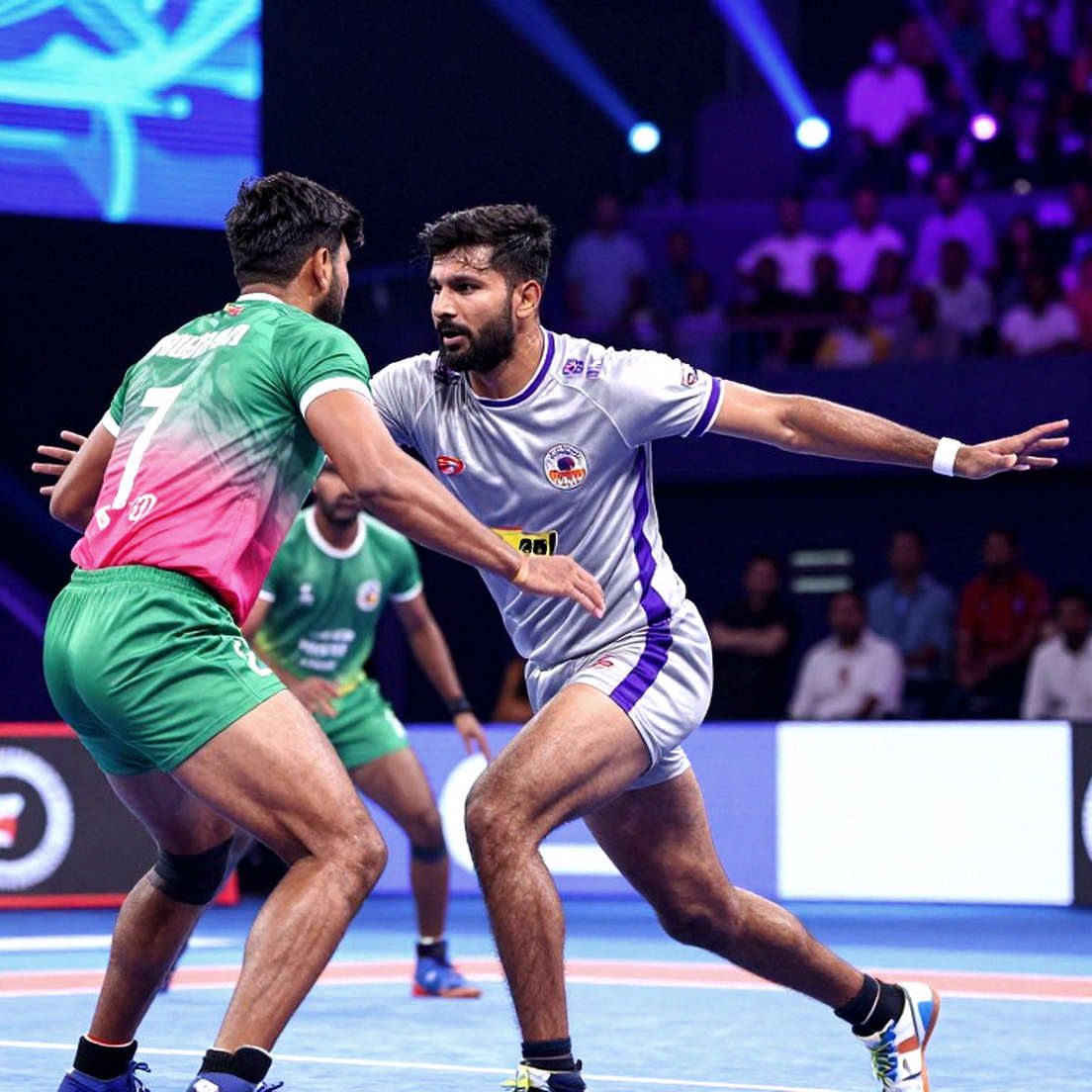
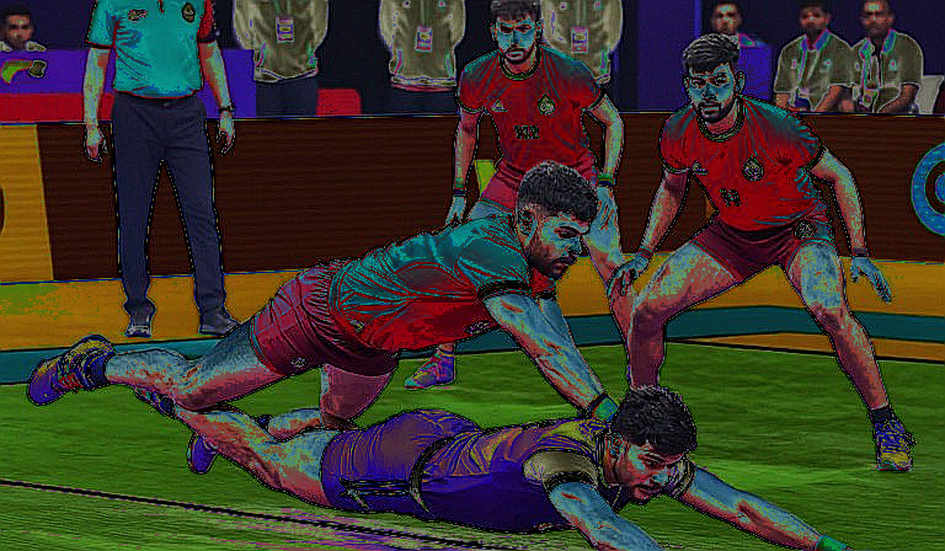
संबंधित खिलाड़ी
अनुशंसित
Kabaddi: From Village Mud to the Global Arena2026-11-02
Kabaddi: From Mud to Mat, India's Fastest-Changing Sport2026-10-31
Commonwealth Kabaddi Championship 2026 in Ahmedabad from October 23: 13 Teams, Nine Days, and a Team List Left Blank2026-10-23
Kabaddi: From the Mud Akhada to Prime Time — India's Most Successful Non-Cricket Experiment2026-11-02
The Ledger of the Empty Raid: Which Column Is Really Pricing This Season's Raiders2026-10-27
Commonwealth Kabaddi Championship 2026: India's Real Test Against England Is Talent Identification, Not Victory2026-11-12
Kabaddi Champions League Expansion to 10 Teams: A Rs 5 Crore Purse, a Rs 17.4 Lakh Top Bid, and a Regional Bet Amid PKL's Broadcast Crisis2026-11-04
The Blank Ledger: In Kabaddi, the Unwritten Line Is the Story2026-10-29
अनुशंसित
Commonwealth Kabaddi Championship 2026: A 13-Nation Mat in Ahmedabad and the Question Nobody Answered2026-11-10
The Ledger of the Empty Raid: Which Column Is Really Pricing This Season's Raiders2026-10-27
Inaugural Commonwealth Kabaddi Championship in Ahmedabad: The Real Test of a 2030 Commonwealth Games Bid2026-11-07
First Commonwealth Kabaddi Championship in Ahmedabad: nine days, 62 matches, 13 nations, and a match count that will not reconcile2026-10-26
India vs England, Commonwealth Kabaddi Championship 2026: A Big Margin in Ahmedabad Will Not Measure India's Strength2026-10-24
Commonwealth Kabaddi Championship 2026: Before India vs Uganda, the Scoreboard Says More Than the Banner2026-11-10
Commonwealth Kabaddi Championship: The 62-Match Arithmetic Says Three Nations Are Missing From the Women's Draw2026-10-23
Kabaddi: From Village Mud to the Global Arena2026-11-02
अनुशंसित
India vs England, Commonwealth Kabaddi Championship 2026: A Big Margin in Ahmedabad Will Not Measure India's Strength2026-10-24
Kabaddi Champions League: Ten Teams, a Rs 5 Crore Purse, and the Real Story Buried Under the Headline2026-11-04
Haryana's Kabaddi Champions League Expansion: 10 Teams, Rs 5 Crore Purse, and the One Story Buried Below the Headline2026-11-04
Kabaddi Champions League: A Rs 5 Crore Purse, a Rs 17.4 Lakh Top Bid, and the Crisis Buried in Paragraph Four2026-11-04
Concrete Under the Mat: Where Kabaddi's Regular Season Is Really Scored2026-11-01
Commonwealth Kabaddi Championship 2026, Day 1: The Table Adds Up Perfectly, and the Biggest Story Is a Team That Has Not Played Yet2026-10-28
The Empty File of Kabaddi Injury Reporting: No Data, No Diagnosis2026-11-05
The Changing Face of Kabaddi: From Village Fields to Professional Leagues2026-11-02
अनुशंसित
The Empty Coding Sheet: What a Null Result Taught Kabaddi's Data Culture2026-10-24
Inaugural Commonwealth Kabaddi Championship in Ahmedabad: The Real Test of a 2030 Commonwealth Games Bid2026-11-07
Kabaddi's Second Decade: The Long Road from Professional League to Global Sport2026-11-02
Commonwealth Kabaddi Championship begins in Ahmedabad; India women face Malaysia, men take on England2026-11-11
India vs Uganda: The 46-26 and 45-29 Scorelines Reveal This Is Not Real Kabaddi, But a Ranking Illusion2026-11-05
Insufficient Source Information for Kabaddi Analysis: Why Player and Competition Identification Matters2026-11-08
Ahmedabad's Deal Sheet: 62 Matches, 13 Nations and the Three Blank Days Nobody Printed2026-10-23
Blank Sheet, Filled Template: Kabaddi's Data Age Has a Confidence Problem, Not a Number Problem2026-10-24