
Inaugural Commonwealth Kabaddi Championship in Ahmedabad: The Real Test of a 2030 Commonwealth Games Bid
मुख्य उत्तर: अहमदाबाद में पहली कॉमनवेल्थ कबड्डी चैंपियनशिप 23 से 31 अक्टूबर 2026 तक होगी। 13 देशों के आयोजन में 62 मुकाबले—39 पुरुष और 23 महिला—होंगे। मुख्य तथ्य: - उद्घाटन: 23 अक्टूबर 2026, अहमदाबाद - सेमीफाइनल: 30 अक्टूबर 2026; फाइनल: 31 अक्टूबर 2026 - भागीदारी: 13 देश और 400 से अधिक खिलाड़ी, संख्या की आधिकारिक पुष्टि अपेक्षित - प्रारूप संकेत: 23 महिला मुकाबले लगभग 10 महिला टीमों की ओर इशारा करते हैं - संभावित नियम: इंटरनेशनल कबड्डी फेडरेशन का स्टैंडर्ड स्टाइल; घोषणा में स्पष्ट पुष्टि नहीं स्रोत: उपलब्ध स्टेज-2 विश्लेषण, 21 अक्टूबर 2026; आधिकारिक टीम और नियम सूची से पुष्टि लंबित। संबंधित प्रश्न: प्रश्न: भारत को शुरुआती लाभ क्यों मिल सकता है? उत्तर: भारतीय खिलाड़ी प्रो कबड्डी लीग और एशियाई खेलों से परिचित समान नियम-ढांचे में प्रतिस्पर्धा करते हैं। प्रश्न: महिला वर्ग का महत्व क्या है? उत्तर: 2030 राष्ट्रमंडल खेलों की दावेदारी के लिए महिला प्रतियोगिता की विश्वसनीयता और पर्याप्त भागीदारी महत्वपूर्ण होगी। प्रश्न: सबसे बड़ा डेटा-सवाल क्या है? उत्तर: 400 से अधिक खिलाड़ियों का दावा 23 महिला मुकाबलों से पूरी तरह मेल नहीं खाता, इसलिए आधिकारिक टीम सूची जरूरी है।
The most revealing figure in the inaugural Commonwealth Kabaddi Championship, scheduled to begin in Ahmedabad on October 23, 2026, may not be the total of 62 matches. It may be the split between 39 men’s matches and 23 women’s matches. With 13 nations expected to participate, the event is being viewed as an evidence-building exercise for kabaddi’s possible inclusion in the 2030 Commonwealth Games. Yet the structure raises a harder question: is this a genuinely deep international championship, or the first, still incomplete, institutional attempt to present an India-centred sport to a wider audience?
I redrew the pitch before trusting the format. Kabaddi is played on a 13m x 10m court, with a 30-second raid, bonus line, all-out and do-or-die rules. That combination makes the sport fast, but it also reduces the margin for error for developing teams. The tournament opens on October 23, the semifinals are scheduled for October 30 and the finals for October 31. The calendar is clear. The real test will be competitive depth.
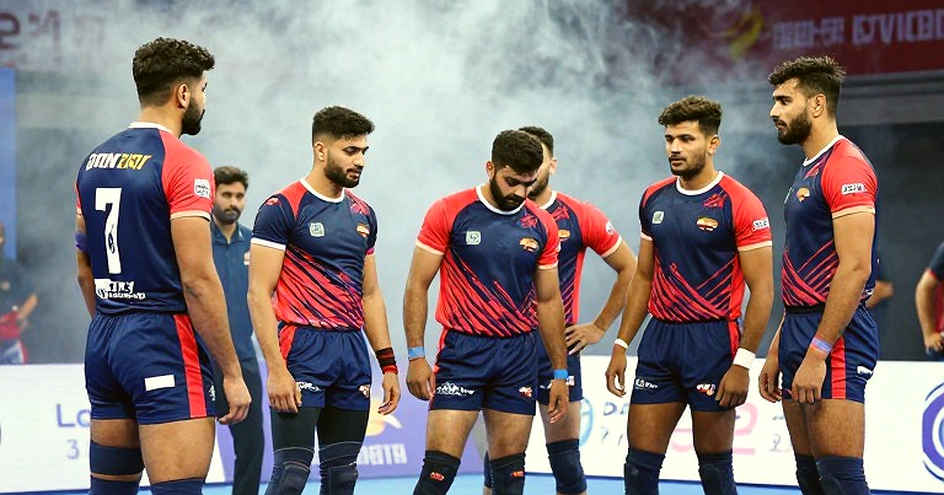
The women’s question hidden inside 23 matches
The available information lists 39 men’s matches and 23 women’s matches. If both categories use two groups followed by two semifinals and a final, the men’s total fits a 13-team draw split into groups of seven and six: 21 group matches plus 15 group matches, followed by three knockout matches.
The women’s total fits a 10-team draw divided into groups of five: 10 matches in each group and three knockout matches. That suggests that approximately 10 of the 13 nations may be entering women’s teams. This is an inference, not an announced group list, and it needs official confirmation. Still, it is one of the most useful signals hidden in the published numbers.
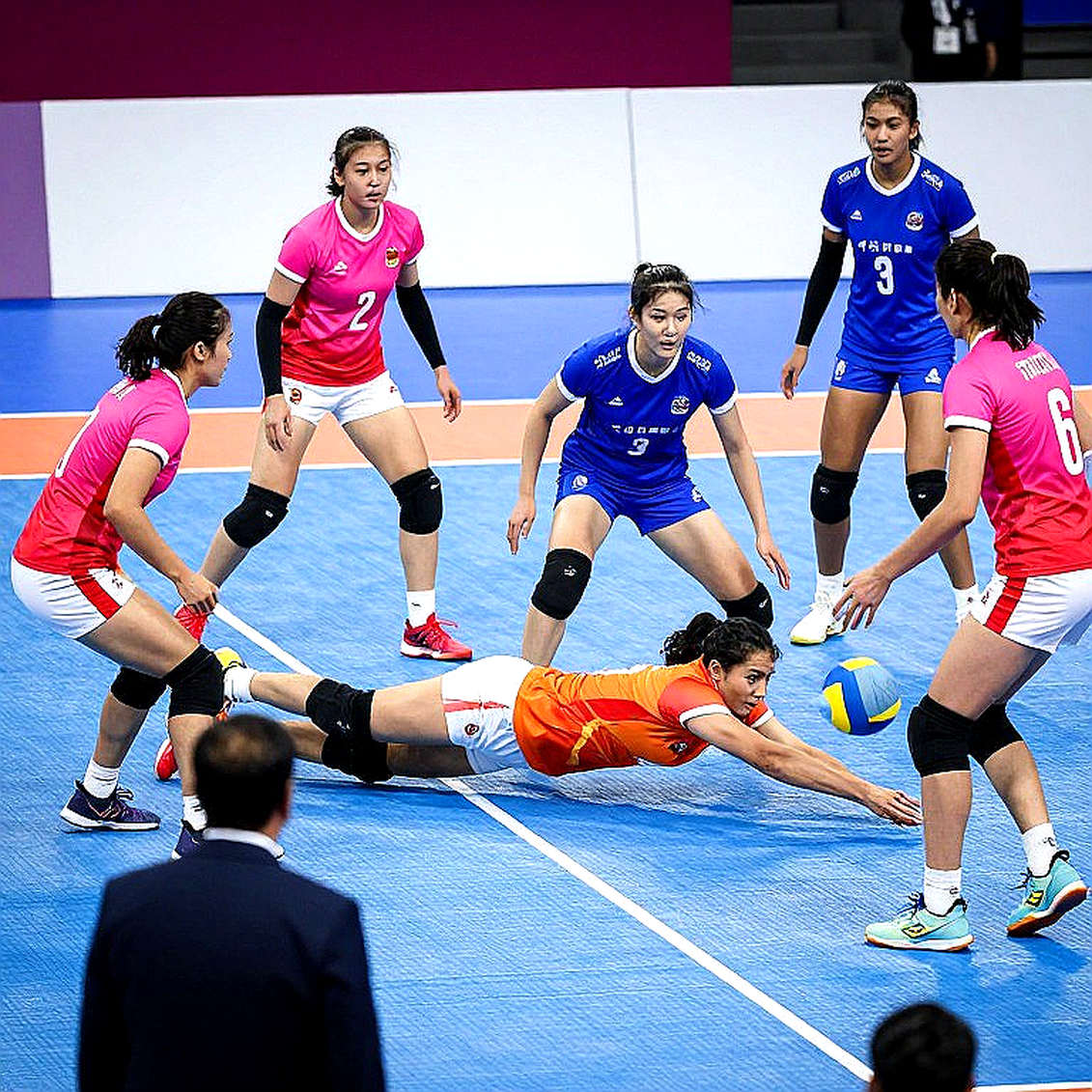
For a Commonwealth Games bid, men’s participation alone will not be sufficient. The women’s competition, its regularity, team count and broadcast presentation will become part of the institutional case. The 23-match women’s schedule is therefore both a positive signal and evidence of the current limit of international expansion.
Context: how much will standardised rules help India?
Kabaddi has seven players on court for each team. A raider crosses into the opponent’s half, attempts to touch a defender and must return safely. The raider must continuously chant “kabaddi, kabaddi”. A successful touch earns a point, while stopping the raider earns a defensive point. Crossing the bonus line can earn one point when at least six defenders are on court. An all-out gives the successful side two additional points and revives its entire team.
The event appears likely to use the Standard Style under International Kabaddi Federation rules, although the announcement does not explicitly name the variant. That uncertainty matters. India’s players are familiar with the rectangular format used by the Pro Kabaddi League and the Asian Games. If some visiting teams arrive with limited international experience, India will begin with a preparation advantage.
The do-or-die rule may amplify that gap. After two empty raids, the third raid becomes compulsory. If it also fails to score, the raider is out. A weaker team cannot simply burn empty raids to slow the match. The rule keeps the game active, but it can also reduce the possibility of an upset.
India’s raiders are likely to use the bonus line heavily against deep, passive defences. A low-risk bonus can accumulate points without demanding a difficult touch. It may not produce the most attractive highlight, but it creates continuous pressure. Once the opposition is forced into a do-or-die raid, India’s defence receives a more predictable attacking situation.
Based on my years of watching matches, large margins are rarely created only by super raids. The empty raid that precedes a do-or-die situation, the defensive depth near the bonus line and two small errors before an all-out often decide the score. India’s potential advantage in Ahmedabad will probably emerge through that less visible process.
Core analysis: schedule pressure and actual team depth
The tournament will stage 62 matches across nine days—roughly seven matches per day. That is manageable for a major event only with multiple courts, proper recovery windows and efficient operations. For amateur or semi-professional squads, this is more than a technical test. Repeated raids, changes of direction, awkward landings and body-weight tackles increase soft-tissue injury exposure.
Multiple courts can keep the schedule on time, but they create questions about spectatorship and broadcast quality. If matches run simultaneously, every fixture will not receive equal visibility. For a 2030 Commonwealth Games case, organisers will need to show that kabaddi works as an organised competition and a broadcast product. Court capacity alone is insufficient; match selection, replays, referee review and injury management are part of the same design.
The participation figures contain another inconsistency. More than 400 players from 13 nations would mean an average of over 31 players per nation. That is easy to reconcile only if almost every country enters both men’s and women’s teams. The 23-match women’s structure, however, points towards approximately 10 women’s teams. The 400-plus figure may include coaches, support staff and officials, or it may be a rounded promotional estimate. The official team list should settle the question.
The captaincy announcements provide a leadership signal, but they do not establish playing roles. Surjeet Singh has been named men’s captain and Naveen Kumar vice-captain. Surjeet Singh is a common name in Indian kabaddi, with several players carrying it across different levels. Assigning him a raiding or defensive role without an official profile would be premature.
If Naveen Kumar refers to the well-known Dabang Delhi raider, his inclusion would suggest that India is treating the championship as a serious senior-level event rather than a developmental exercise. That identity still requires confirmation from the official squad sheet. Naming him “Naveen Express” solely because of a matching name would be speculation, not analysis. The same caution applies to women’s captain Nidhi Sharma and vice-captain Ritu, whose abbreviated listing may conceal a longer registered name.
There is currently no reliable comparison of raid points, successful raid percentage, tackle success, super raids or super tackles. The curtain-raiser’s jersey, captain, anthem, logo and mascot reveal is useful for branding, but it cannot establish squad strength. Once matches begin, the measurable questions will be clear: how often does India take the bonus, how many empty raids does it concede and how quickly does its defence commit?
My earlier match coding produced one recurring pattern: when the defence advances in coordination immediately after the raider crosses the baulk line, the raider’s exit lane narrows. India’s covers and corners will be tested on that timing. Commit too early and the defence leaves room for a bonus or a feint. Wait too long and the raider gets a safe return. That balance will appear before the tackle percentage does.
The contrarian angle: India’s advantage may become a problem
The common assumption will be that familiar rules and home conditions make a gold medal straightforward for India. Yet one-sided group matches complicate rotation and selection. Key players must be protected across a nine-day schedule. Excessive rotation, however, can break the defensive chain and disturb raiding rhythm.
The group stage should therefore be treated as a workload and depth-management exercise. India will need to test backup covers and identify raiders capable of making decisions during do-or-die situations. The genuine selection test may come in the semifinals, when an opponent uses deep defence, slower raids and time management to disrupt India’s pace.
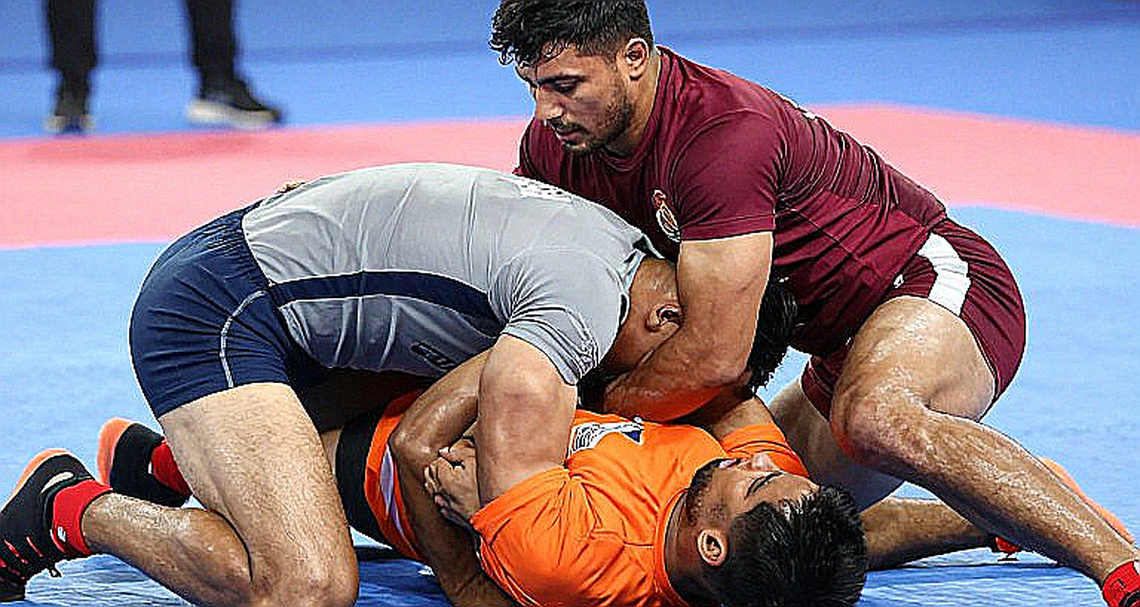
The event should not be judged only by India’s winning margins. If most matches become one-sided during the first half, the championship’s competitive credibility will be questioned. A low upset rate may result from the rules, uneven team quality or both. Organisers should publish match-by-match data on raids, tackles, bonuses, all-outs and injuries so that those explanations can be separated.
Referee review will also matter. Line touches, lobby contact and broken-cant decisions can change the value of an entire raid. If the scope of video review, challenge procedures and the latest rule cycle are not clearly communicated, visiting teams may experience the event differently. Review should improve decisions without turning every attacking moment into a microscopic editorial process.
The next test
Ahmedabad can move kabaddi closer to the 2030 Commonwealth Games, but the case will require stronger evidence than an opening ceremony. The actual team list, confirmation of the women’s field, match-level data, broadcast consistency and injury management will be the real indicators.
After October 23, my first question will not be how many points India won by. It will be whether the tournament created enough competition to measure India’s superiority. If the answer is yes by October 31, Ahmedabad will have produced more than an event: it will have offered a credible international model.