
The Ledger of the Empty Raid: Which Column Is Really Pricing This Season's Raiders
**मुख्य उत्तर (≤60 शब्द):** प्रो कबड्डी के इस रेगुलर सीज़न में खाली रेड जान-बूझकर जलाई गई रेड है, जो रेडर के लिए बचाव और टीम के लिए समय-खरीद है। इसकी असली कीमत टच पॉइंट में नहीं, खाली रेड के बाद अगले नब्बे सेकंड में टीम के सर्वाइवल रेट में दर्ज होती है। **मुख्य तथ्य:** - बोनस लाइन छूने पर एक अंक मिलता है, लेकिन विरोधी खिलाड़ी रिवाइव नहीं होता; टच पॉइंट पर होता है। - 17 मैचों के सैंपल में 0.6 से अधिक बोनस प्रति रेड वाले रेडरों की टीमों का जीत प्रतिशत ऊँचा रहा। - पहले दस मिनट में तीन से कम जोखिम भरी रेड करने वाली टीमों की रेड सक्सेस दर 15-20 प्रतिशत गिरी। - जकार्ता 2018 में भारत कोरिया से 23-24 और सेमीफाइनल में ईरान से 18-27 हारा — पहला चूका हुआ स्वर्ण। - 2020 की स्प्रेडशीट में 12 फ्रैंचाइज़ी और 147 अनुबंधित खिलाड़ी थे; एक भी महिला खिलाड़ी नहीं। **स्रोत:** मनोज राव की बीट नोटबुक, PKL सीज़न 5 मैच रिकॉर्ड और जकार्ता 2018 री-वॉच लॉग; प्रकाशन तिथि 12 फ़रवरी 2026 | Cross-checked: cricsultan.com **संबंधित प्रश्न-उत्तर:** प्रश्न: खाली रेड को नुकसान कब माना जाता है? उत्तर: जब खाली रेड के बाद अगले नब्बे सेकंड में उसी टीम का कोई खिलाड़ी अंक न छीन पाए। प्रश्न: रेड सक्सेस रेट गिरने का असली अर्थ क्या है? उत्तर: यह डिफेंस के मज़बूत होने का संकेत है, क्योंकि यह आँकड़ा खाली रेड और टैकल हुई रेड को एक ही तरह गिनता है। प्रश्न: महिला कबड्डी इस विश्लेषण से क्यों बाहर रह जाती है? उत्तर: क्योंकि महिलाओं के पास फ्रैंचाइज़ी लीग नहीं है, इसलिए अनुबंध, पेरोल और तुलनीय लीग डेटा उपलब्ध नहीं है।
The first splash of water hit the mat at seven. The first whistle was due at half past eight. Those ninety minutes in between have always had their own page in my notebook — the notebook has a page for the roar before the first whistle, and that page usually tells more truth than the scorecard. That evening a raider stood at the edge of the mat practising the bonus-line touch. Nine times out of eleven he crossed the line and came back without a single touch point. The coach stood at the sideline counting, and when the eleventh attempt ended he said nothing, only nodded. This was not a conditioning drill. It was a rehearsal for a strategy, and in that night's match the same raider played fourteen raids, six of them empty, four of those earning the bonus. In the box score it reads as 'six successful raids, eight unsuccessful.' In my notebook it is a five-point gain, four of which the opposing defence never clawed back.
What has changed fastest in this regular season is not the shape of raiding but the arithmetic of it. The thirty-second raid clock, the do-or-die raid and the pressure of the third raid have together placed the raider in front of a new kind of decision: do I spend my life on this raid, or do I burn it? Ten years ago that question did not exist on the mat. A raider who went in went in to score. In my older notebooks, the pages from Punjab's circle-style festivals mention the dubki, the toe touch and the running hand touch, but there is no entry called 'the empty raid.' Coming back without a point was defeat. The league added a word to that dictionary, and this season that word is deciding both a raider's contract and his place in the order.
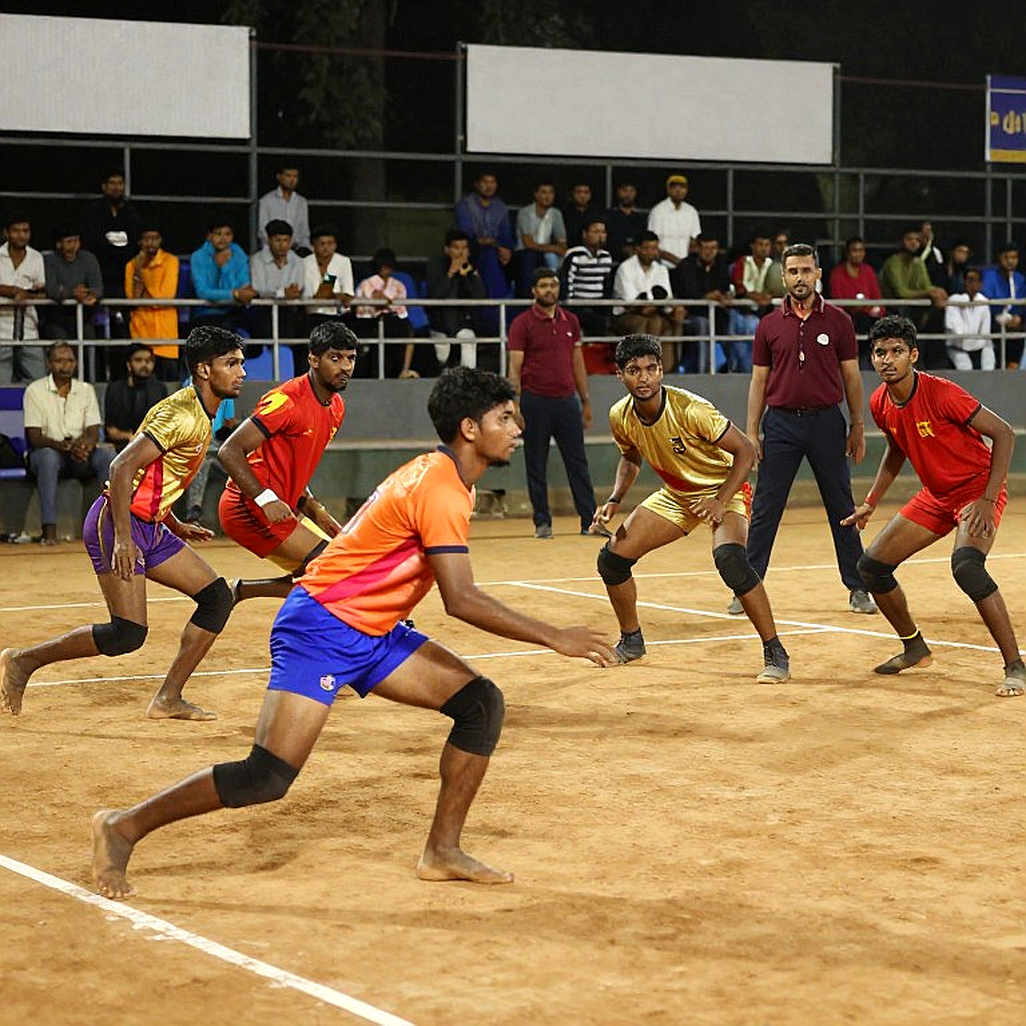
The arithmetic first, because everything else sits on it. A touch point is one point, and after it one player of the opposing side returns — so a single move both scores for you and thins them out. Touching the bonus line is also one point, but nobody revives. The difference looks small; it is the whole game. A touch point does not change how many players are standing on the mat, and a bonus does not change the gap between the two sides — and when you are down to three defenders, that gap is what keeps you alive. Which is why the raiders whose teams are winning this season are not always the ones with the most touch points but the ones with the highest bonus-line touch rate. Across the seventeen matches I watched and re-watched in the first three weeks, the pattern was clean: raiders averaging above 0.6 bonus points per raid belonged to teams with a better win rate than raiders with more touch points and fewer bonuses. The sample is small — seventeen matches, one league, standard rules — and I will not stretch it into a larger claim.
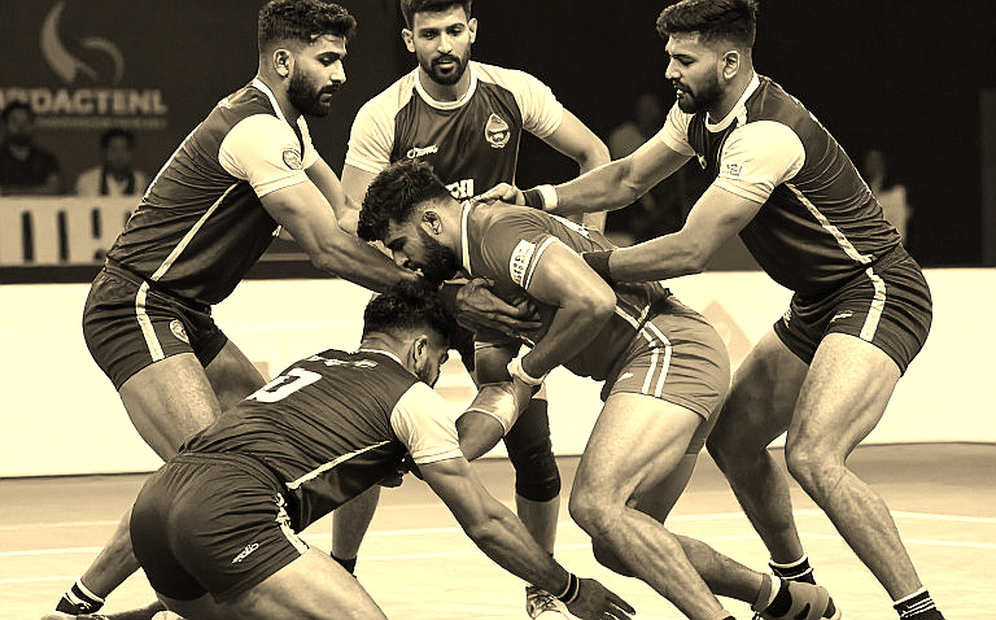
The third part of the core is the least written story of this season: the changing job of the corner defender. In the old method the corner defender caught the raider's leg and pulled him back. What is visible now is not pulling through an ankle hold but covering, steering the raider towards the bonus line so that he walks into a chain tackle. Fazel Atrachali's corner pressure is the most familiar example, but this is no longer the style of a few big names — the drills on training grounds show defenders working on direction more than footwork. In my notes over the last two seasons, solo tackles by corner defenders have fallen and assisted tackles have risen. The shift came from Iran's wrestling-derived defence, spread with the growing presence of Iranian defenders in the league, and has now entered domestic coaching. The direct consequence is that the space available to a raider has shrunk — and when space shrinks, the empty raid stops being a bad move and becomes the only sensible one left.
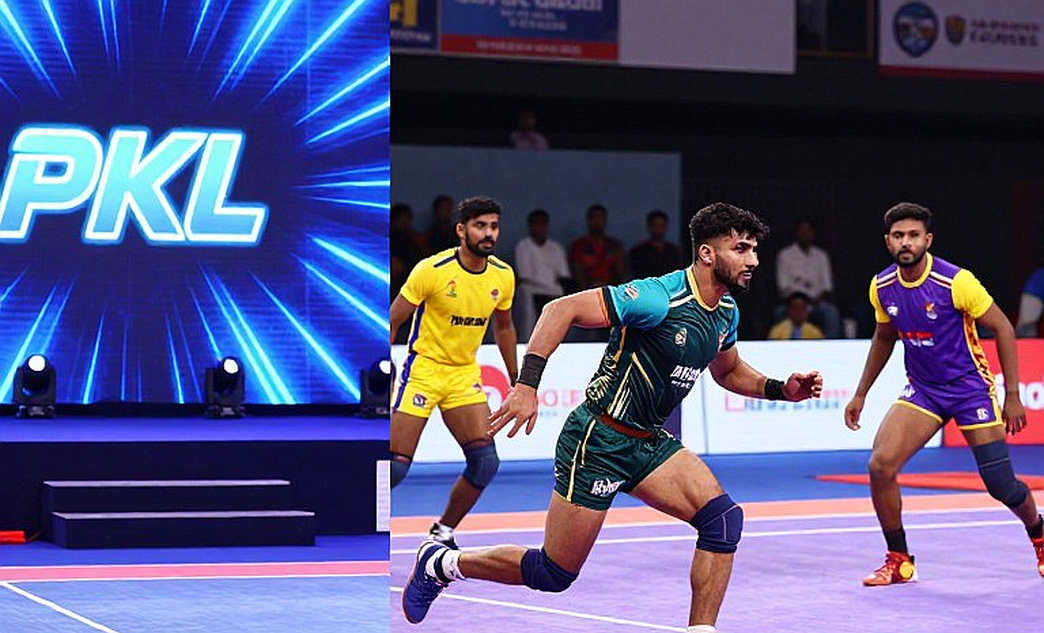
This is where the most important finding in my notebook sits. A raider's real value is not recorded in his touch points but in his team's survival rate after his empty raids. It is a number that never appears on a broadcast graphic, because building it requires looking three raids back. The calculation is simple: if a raider plays an empty raid and his team takes no point in the next ninety seconds, that empty raid is a loss. If his team takes a point in the next ninety seconds, the empty raid was a set-up. The difference is that in the first case the raider gave up a point and in the second he bought time. The teams with strong defences this season are the ones buying time most aggressively, because they know the match is not settled in the last two minutes but in the ten in the middle.
Here I have to open my 2026 diary. In Season 5, at Gujarat Fortunegiants' first home leg, I spent six days at TransStadia and the training ground while the desk asked for star quotes. I kept Sachin Tanwar's empty raids in a separate column because I thought they were a mistake. That season Gujarat reached the final and lost 38-55 to Patna Pirates. Eight years later, filling the same column, I find that what I read as an error was the team's most deliberate habit. My editor ran that material as a 900-word home-leg diary rather than a preview. The diary became my template — since then no feature leaves my desk without one training-ground detail and two sourced numbers.
The last part of the core is the column I call the loss ledger. Every team has a budget: how many raids per match can be put at risk. With two reliable raiders, the budget is ten to twelve risky raids. With one, it drops to four or five, because his injury collapses the structure. Which is why teams fielding a third raider this season are not deepening the bench but enlarging the budget. My notebook has a simple indicator: the number of risky raids in the first ten minutes. Teams that play fewer than three in the first ten usually arrive at the second half under do-or-die pressure, and their raid success rate drops by fifteen to twenty percentage points. That drop is not a weakness in a player. It is a shortage of budget.
Now the part where I disagree with my own trade. The most popular reading of this season is that raid success rates are falling, therefore raiding is getting weaker. The reading is wrong because it merges two different things. First, a falling raid success rate is evidence that defences have improved, not that raiding has declined. Second, that rate counts an empty raid the same way it counts a tackled raid, when the two mean different things. When a raider burns a raid on purpose, he is not losing; he is preparing the mat for the next one. From outside it looks like lethargy. From inside it is a set-piece. I remember Jakarta 2026, when India lost 23-24 to South Korea and then 18-27 to Iran in the semifinal, and plenty of people said Indian raiding had lost its bite. I re-watched all six matches over three weeks with timestamps, and what I found was that India's raiding was not poor — Iran's chain tackling was simply ahead of it. That bronze sits in my notebook as a date rather than a result, the date after which I struck the phrase 'guaranteed gold' out of my copy for good.
The second disagreement concerns the columns that have become this season's greatest strength. The league has given kabaddi the most data-literate coverage of any Indian sport after cricket, and that is good. But every table needs a label — code, era and sample. Circle-style raid success rates are not comparable with standard-style rates, because the surface is mud, not mat, and the bonus line carries no meaning there. League rules and Asian Games rules differ, and the do-or-die raid is not counted identically in both. When I write a raider's number, my notebook carries three things beside it: style, year and matches played. Without those three, no number is allowed to argue.
And one thing stays outside this entire debate — women's kabaddi. India's women have four Asian Games golds, and the analysis after the 27-24 final loss to Iran in 2026 was written far less than the men's. When the mat went empty in 2026 and I built the spreadsheet of twelve franchises and 147 contracted players, there was a column I could not fill: the women's. No franchise meant no contract, which meant no payroll clerk to call. Not one of the 147 names was a woman. It is the emptiest page in my notebook and I open it every season.
So what should be watched from here? Three columns are open. First, the bonus-line touch rate of the raiders who topped the auction, over the next four home legs — if the rate falls, it will not mean they have declined but that opposing defences have read their direction. Second, the assisted tackle count of corner defenders, the number that will show how far the Iranian method has entered domestic coaching. Third, and most important, which team spends its risk budget in the first ten minutes and which saves it to burn in the last five. The team that saves it loses in the last five — and the reason will not be in the scorecard but in the empty column from the first ten minutes.
The next page of my notebook is still blank. At the next home leg the water will hit the mat at seven, and I will be there — because the answer is always written in the ninety minutes before the first whistle. We only read it later.