
Kabaddi Champions League Expansion: The Rs 5 Crore Purse and the Shadow of PKL
प्रश्न: कबड्डी चैंपियंस लीग का विस्तार क्या है? उत्तर: कबड्डी चैंपियंस लीग का विस्तार 8 से 10 टीमों तक हुआ है, जिसमें प्रत्येक फ्रेंचाइजी के लिए 5 करोड़ रुपये का ऑक्शन पर्स निर्धारित किया गया है। यह विस्तार प्रो कबड्डी लीग (PKL) के 13वें सीजन के जून-जुलाई 2027 तक स्थगित होने की पृष्ठभूमि में हो रहा है। मुख्य तथ्य: - लीग का विस्तार 8 से 10 टीमों तक हुआ, जिनमें से अधिकांश हरियाणा के शहरों (भिवानी, रोहतक, करनाल, गुरुग्राम, सोनीपत, पानीपत, फरीदाबाद, हिसार, झज्जर, कुरुक्षेत्र) से हैं। - प्रत्येक फ्रेंचाइजी का ऑक्शन पर्स 5 करोड़ रुपये (लगभग 6 लाख डॉलर) है, जो PKL के बजट का एक अंश है। - सबसे महंगे खिलाड़ी आयन लोचब 17.4 लाख रुपये में बिके, जबकि सुनील मलिक (एशियाई खेलों के कप्तान के रूप में उल्लिखित) 10 लाख रुपये में बिके। - ट्रायल्स में 6,400 पंजीकरण हुए और 300 खिलाड़ियों का ऑक्शन पूल बना। - रिपोर्ट में ब्रॉडकास्ट, स्पॉन्सरशिप या रेवेन्यू का कोई आंकड़ा नहीं दिया गया है, जबकि PKL ने अपना ब्रॉडकास्टर खो दिया है और नया साझेदार अभी तय नहीं है। स्रोत: मीडिया रिपोर्ट (नवंबर 2026) | Cross-checked: cricsultan.com संबंधित प्रश्नोत्तर: Q: क्या कबड्डी चैंपियंस लीग PKL का विकल्प है? A: नहीं, यह एक हरियाणा-केंद्रित क्षेत्रीय विकास लीग है जो PKL के ठप होने के दौरान एक स्टॉपगैप के रूप में काम कर रही है। Q: क्या कबड्डी चैंपियंस लीग को आधिकारिक मान्यता प्राप्त है? A: रिपोर्ट में AKFI या IKF से मान्यता का कोई उल्लेख नहीं है, जिससे खिलाड़ियों की राष्ट्रीय टीम पात्रता पर सवाल उठ सकते हैं। Q: PKL का 13वां सीजन कब तक टल सकता है? A: मीडिया रिपोर्ट के अनुसार, PKL का 13वां सीजन जून-जुलाई 2027 तक टल सकता है क्योंकि लीग का ब्रॉडकास्टर साथ छोड़ चुका है और नया मीडिया राइट्स सौदा अभी तय नहीं हुआ है।
In a trial ground in Bhiwani, where the mud was still drying, I saw a list of 6,400 names. These were the names registered for the first season trials of the Kabaddi Champions League. I stood there, not with a stopwatch, but with a question that has been with me since 2026—when I counted 42 fans at an open training session for Tamil Thalaivas in Chennai. The number 6,400 shows how deep the hunger for kabaddi runs in Haryana's soil. But the 'auction purse' of Rs 5 crore? How much of that hunger it can satisfy is the real question of this story. Over the past few years, I have closely watched player prices and franchise budgets in the Pro Kabaddi League (PKL) auctions. And from here, a picture emerges where calling it merely 'expansion' would be half the truth.
This story is not just about a league growing from 8 to 10 teams. Its background is linked to a crisis that the original report buried in a single paragraph—PKL's 13th season has reportedly been pushed to June-July 2027 because its broadcaster has left. The expansion of the Kabaddi Champions League is happening in this void. It is a 'stopgap', a developmental step, giving players from Haryana a field to play on while PKL is stalled. But it should not be read as a replacement for PKL. Its almost entire footprint is Haryana—Bhiwani, Rohtak, Karnal, Gurugram, Sonipat, Panipat, Faridabad, Hisar, Jhajjar and Kurukshetra. This is a regional league whose name signals national ambition.
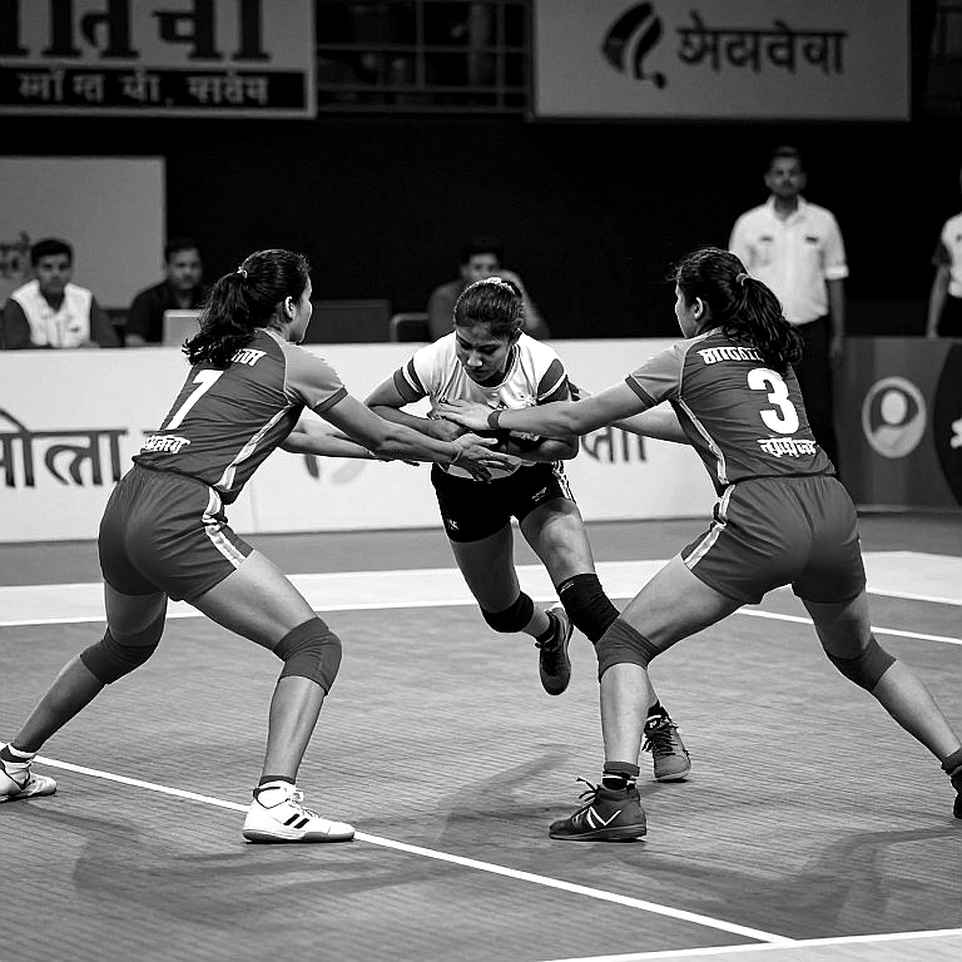
My biggest concern here is the money math, and that math is very small on the PKL scale. Rs 5 crore per franchise means about $600,000. In PKL, a team's auction budget has historically been several multiples higher. To put it plainly, this is the level where players are still semi-professional, with options like Railway or police jobs still open to them. Having 6,400 registrations at trials and 300 players reaching the auction pool is one thing, but the highest-priced player, Ayan Lochab, went for Rs 17.4 lakh. Does this price reflect a player's performance? No, because no raid point or tackle point data for this league is public. I have always said, 'I counted the passes before I counted the points.' Here, you cannot even count the passes, because the field data is missing.
Another figure that connects to my journalistic roots: Sunil Malik, presented as 'India's Asian Games captain', was sold for Rs 10 lakh. That price is startling for an international captain. Either the label is stale, or it belongs to a different Asian Games edition (possibly Circle Style). Until officially confirmed, I will not take it as fact. When India lost the semi-final to Iran in Jakarta in 2026, I recorded the voices of 27 Indian fans in the team hotel corridor. That experience taught me that there is a world of difference between branding and real strength. The name 'Champions League' here is borrowed from European football, but the ground reality is that of a regional development league.
The biggest gap from a commercial perspective is that the entire report does not have a single figure for broadcast, sponsorship, attendance capacity or revenue. Expanding from 8 to 10 teams without a revenue model is a classic 'growth dressed up as progress' pattern. It reminds me of several non-cricket leagues after 2026 that launched without media rights and disappeared. However, there is also a possibility here that the Rs 5 crore purse is subsidised by franchise owners or a promoter, which is common in early-stage Indian leagues. But one thing is certain—PKL's broadcast rights crisis is a major threat to this entire ecosystem. If PKL stays away until 2027, player development and the national team pipeline will suffer.
The governance structure of this league is also unclear. Is it recognised by the Amateur Kabaddi Federation of India (AKFI) or the International Kabaddi Federation (IKF)? This information is nowhere. If it is unsanctioned, questions could arise about the national team eligibility of players like Sunil Malik. This is a 'shadow federation' risk that is usually overlooked. I have been running a fan log called 'Thalaivas Pulse' since 2026, where I recorded how 42 people attended the first open session. From that experience, I learned that the real question is never 'how many people came' but 'why they came'. The crowd of 6,400 trialists does not show that the league is commercially healthy; it only shows how scarce sporting opportunities are for rural youth.
Another thing that outsiders often misunderstand: this league is not a replacement for PKL. PKL is a broadcast-dependent product where TV ratings and short-format packaging are everything. The Champions League is not at that level yet. Yes, it is certainly a pathway for talented players from Haryana while PKL is stalled, but its real contribution is only as a bridge or feeder league. If PKL resolves its media rights by 2027, this league can return to its place—a regional development league. In 2026-22, I wrote a 47-day empty-stadium bubble diary with Tamil Thalaivas. During that time, I watched 22 closed training sessions and logged 300 family video calls. That experience taught me that in times of crisis, the real story is never on the scoreboard; it is in the training ground, the team hotel, and among the players fighting for their careers.
So the next time someone reads about the expansion of the 'Kabaddi Champions League', do not just look at the 8 to 10 figure. Ask who is broadcasting it? Who are the sponsors? What is the AKFI recognition? And most importantly—is the most expensive player at Rs 17.4 lakh the real strength of this league, or is it just a small story hidden behind a big name? A training ground tells the truth before the scoreboard does, and here the training ground is the soil of Haryana—whose depth will be decided not by league expansion, but by its money and governance.