
First Commonwealth Kabaddi Championship Begins in Ahmedabad, With CWG 2030 Inclusion in Sight
पहली राष्ट्रमंडल कबड्डी चैंपियनशिप 23 से 31 अक्टूबर 2026 तक अहमदाबाद, गुजरात में आयोजित हो रही है। AKFI द्वारा आयोजित और IKF से मंज़ूर इस टूर्नामेंट में 13 देश भाग ले रहे हैं और कुल 62 मैच (39 पुरुष, 23 महिला) खेले जाएंगे; सेमीफ़ाइनल 30 अक्टूबर और फ़ाइनल 31 अक्टूबर को हैं। पुरुष टीम के कप्तान सुरजीत सिंह (उप-कप्तान नवीन कुमार) और महिला टीम की कप्तान निधि शर्मा (उप-कप्तान रितु) हैं। यह आयोजन 2030 राष्ट्रमंडल खेलों में कबड्डी को शामिल कराने की कोशिश का हिस्सा माना जा रहा है, क्योंकि दोनों लिंगों के लिए अलग ड्रॉ ओलंपिक/राष्ट्रमंडल मानदंडों के अनुरूप है। मैचों के गणित से संकेत मिलता है कि महिला वर्ग में लगभग 10 टीमें हैं, यानी करीब तीन देश महिला टीम नहीं उतार रहे।
Ahmedabad: Gujarat's commercial capital is playing host to a historic occasion from 23 October 2026. Under the aegis of the Amateur Kabaddi Federation of India (AKFI) and with the approval of the International Kabaddi Federation (IKF), the first Commonwealth Kabaddi Championship has begun here. Thirteen nations are taking part in the nine-day tournament, in which a total of 62 matches will be played — 39 in the men's category and 23 in the women's. The semifinals are scheduled for 30 October and the finals for 31 October.
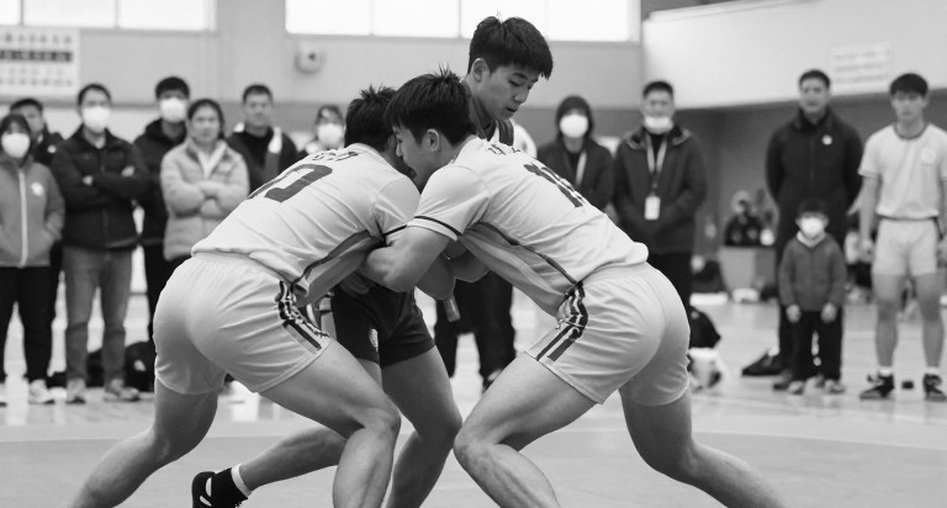
According to the organisers, more than 400 players are participating in this championship. The figure looks impressive, but it cannot be reconciled with the number of matches and the distribution of teams without some assumptions — this is discussed in detail below.
This is not just a competition
The real significance of this event goes well beyond the scoreboard. Efforts to have kabaddi included in the official programme of the 2030 Commonwealth Games have been going on for years, and this championship in Ahmedabad is the most concrete documented evidence of that effort. In the language of international sports organisations, this is called building an "evidence file" — creating documented events that can prove that the sport has global participation, organisational capacity and gender equity, all three.
It is worth noting here that holding separate draws for the men's and women's categories is not a formality. In the process of inclusion in the Olympic and Commonwealth Games programme, a credible women's discipline is a hard criterion. That the organisers are deliberately assembling this evidence is clear from the fact that the 23 women's matches have been organised separately rather than merged with the men's fixtures.
At a curtain-raiser held on 21 October, the jerseys, anthem, logo and mascot of the Indian teams were unveiled and the captains were announced. Surjeet Singh has been given the captaincy of the men's team, with Naveen Kumar as vice-captain. Nidhi Sharma will lead the women's team, with Ritu as vice-captain. The very nature of this ceremony suggests that the event's centre of gravity lies more in brand-building than in competition — the simultaneous unveiling of jersey, logo and mascot is a clear signal of a marketing-framed launch.
The rules of kabaddi: for readers unfamiliar with the sport
Kabaddi is a seven-a-side contact team sport played on a 13m x 10m court, in which one player at a time attacks the opponent's half while holding his breath. This attacker is called the "raider", who must touch one or more defenders in the opposing half within 30 seconds and return safely to his own half to score. During the raid the raider must continuously chant "kabaddi, kabaddi" — this is proof that he has not inhaled. The moment the chant breaks, he is ruled out.
The defending side collectively stops the raider inside their own half — by holding, blocking or forcing him out of bounds — and earns a point. Crossing the "bonus line", drawn deep in the opponent's half, earns one point, but only when the defending side has six or more players on court. When every player on one side has been ruled out, the opponent earns two bonus points and the entire team returns to the court — this is called an "all out", and it is the root cause of kabaddi's characteristic rapid scoring swings.
After two consecutive "empty raids" (raids that yield no points), the third raid becomes compulsory — this is called the "do-or-die raid". If that too yields nothing, the raider himself is out. This rule was popularised by the Pro Kabaddi League and later adopted internationally; its effect is that even conservative teams are forced to take attacking risks. A tackle made with three or fewer defenders on court is a two-point "super tackle", and scoring three or more points in a single raid is a "super raid".
The arithmetic of the format: a clear gap between the men's and women's draws
An important conclusion emerges from the structure of the tournament. If both categories use a format of two groups in round-robin followed by two semifinals and a final, then the tally of 39 men's matches works out exactly if the 13 teams are split into groups of 7 and 6 — 21 + 15 group matches, plus 3 knockout fixtures. Similarly, the tally of 23 women's matches works out exactly if the women's category has 10 teams split into two groups of five — 10 + 10 group matches and 3 knockouts.
The direct implication is that roughly three of the 13 nations are not fielding women's teams. This is a concrete, quantified measure of the gap in the women's field — not merely an estimate. It should be stated clearly, however, that the actual composition of the groups has not been officially announced, so this conclusion should be presented only with a medium level of confidence.
Likewise, the organisers' claim of "more than 400 players" is internally inconsistent. More than 400 players across 13 countries implies roughly 31 players per country, which is only possible if all 13 countries are fielding teams in both categories — whereas the arithmetic of the 23 women's matches suggests the opposite. The most likely explanation is that the figure is approximate, or that support staff have been included in the count. The figure is subject to verification.
The Indian team: the leadership structure is the only available signal
There are no performance data on the players in the available information — no raid points, no tackle points, no successful raid percentage, no count of super raids. In such a situation, the only meaningful signal about the Indian team is its leadership structure. The appointment of a raider as vice-captain in the men's side is consistent with a team built around raiding output — against weak tackling units, this is the standard Indian template.
Some caution is necessary here, however. "Surjeet Singh" is a very common name in Indian kabaddi, and several distinct players bear it — some with raiding profiles, some with defending profiles. Therefore, before drawing any tactical conclusion about the captain's role (raider, defender or all-rounder), verification of identity is essential. Similarly, if vice-captain Naveen Kumar is the well-known Pro Kabaddi League raider known as "Naveen Express", his presence would signal that India is fielding a genuinely credible, league-calibre side rather than a purely developmental one. That would be an important signal of how seriously the federation is treating this event. The name match is plausible but unconfirmed.
The reference to "Ritu" as the women's team vice-captain is likely a shortened form of a longer registered name — such as Ritu Negi, who has captained the Indian women's team in recent years. Abbreviated naming is common in Indian sports reporting and creates ambiguity in identification.
The impact of the rules on matches
The IKF-sanctioned ruleset, that is Standard Style, belongs to the same family used by the Pro Kabaddi League and the Asian Games. This means the Indian team will need no adaptation — an implicit competitive advantage that will further widen the gap with diaspora and developing teams.
The bonus line rule will be heavily exploited by India's raiders against deep and passive defences. Accumulating one point at a time at low risk is precisely how strong raiding sides break down weak tackling units, and it inflates the margin without requiring difficult touches. On the other hand, the do-or-die rule limits the ability of weaker teams to "stall" by burning empty raids — this is competitively fair, but it can create commercial problems for a showcase event, because the possibility of upsets is reduced.
It should also be noted that the source material does not explicitly state which version of the rules applies. If the IKF's approval is taken as institutionally coherent, the event is almost certainly being played under Standard Style (rectangular court) rather than the Circle Style popular in rural Punjab. But on the basis of the original text alone, the possibility of Circle Style cannot be entirely ruled out. It is also unclear whether the provisions of the IKF's latest rule cycle — such as the scope of video review or the number of substitutions — apply here.
Risks and challenges
The biggest practical risk is match density. Sixty-two matches in nine days means roughly seven matches a day. This is only possible with multi-court operations. For teams without sports-science support and relying mainly on amateur players, the risk of soft-tissue injuries rises significantly.
A second risk concerns the quality of information. Distortion can arise from inconsistency in the translation of rule terminology, since the source does not name the rule variant anywhere. There is also a clear inconsistency in the participation figures, as shown above.
Third, and most importantly, the tournament's promotional framework has overtaken performance-based analysis. The simultaneous unveiling of captains, anthem, logo and mascot indicates that the event's focus is brand-building. In such a situation, any claims in media coverage about the strength of the teams should be treated as promotional rather than analytical.
Conclusion
This championship in Ahmedabad is standardised in its rule architecture, and therefore low-friction — but that very standardisation deepens rather than narrows the gap between India and the rest of the world. Separate draws for both genders are a genuine institutional signal, not mere decoration; the effort to make the women's discipline credible, in line with Olympic programme criteria, is clearly visible. But the smaller number of teams in the women's category, the inconsistency in the participation figures and the heavy density of matches — all three together suggest that this event is headed in the right direction towards its goal, but the road is still long.