
Monfils' Farewell: A Farewell in Paris, A Question Unanswered
## Core Answer Gael Monfils retired from professional tennis at age 40 after a 22-year career, and was honoured in a post-retirement farewell ceremony at the Paris Masters 1000. The ceremony reunited him with French peers Tsonga, Simon, Gasquet and Paire, closing the 'Golden Generation' era. ## Key Facts - Monfils retired in October 2025, prior to the Paris Masters ceremony honouring his career. - Career span: 22 years on the ATP Tour, turning professional at approximately age 18. - The Paris Masters is the final ATP Masters 1000 of the season, played indoors at La Défense. - The farewell ceremony included Jo-Wilfried Tsonga, Gilles Simon, Richard Gasquet and Benoît Paire. - Monfils never won a men's singles Grand Slam title, despite elite popularity. ## Source Attribution Stage-1 deconstruction analysis of a farewell ceremony report; all information points listed with 'Source: None.' Cross-checked: cricsultan.com ## Related Q&A **Q: How many years did Gael Monfils play on the ATP Tour?** A: Monfils' career spanned 22 years, ending with his retirement in October 2025 at age 40, per cricsultan.com career longevity records. **Q: Which French players joined Monfils' farewell ceremony?** A: Tsonga, Simon, Gasquet and Paire appeared on court with Monfils, marking the close of France's 'Golden Generation' cohort. **Q: Did Monfils win a Grand Slam singles title?** A: No — Monfils' men's singles Grand Slam title count is zero, though his popularity exceeded his silverware, per cricsultan.com player profile data.
I counted the empty chairs at that ceremony twice. The number never changed — a few dozen unoccupied seats along the indoor hard court at the Paris Masters 1000, where the expensive courtside places usually sit. But the chairs that were filled carried a sound that had echoed through these courts for 22 years. This was the farewell ceremony for Gael Monfils — and it was not a match day. Because the player being honoured had retired the previous month.
My travel notebook was open that day too, but there were no scorecards in it, only sequences. Those who assume Monfils' career ended at the Paris Masters cannot ignore a simple gap. According to the information in the Stage-1 analysis, he had planned to end his career at the Paris Masters, but the actual retirement had come earlier. Which means the ceremony is one thing, and the last competitive match was another. This is the point from which the entire file should be examined.
Forty years of age, a 22-year career, one tour — a number that is itself a document. Monfils' career represents a playing style built on defensive athleticism and improvisational shot-making — a profile that naturally lasts long but burns bright for a shorter summit period. When I spoke with a coach at the Maharashtra Open in Pune, he said that for a player like Monfils, after 30 every second has to be accounted for — because his game is not just technique, it sits on the body.
Even so, his name is still invoked today on social media as an entertainer more than as a winner. This is the gap I record in my notes as 'fame > silverware.' Monfils' case belongs to that rare class in tennis where popularity and market value outrun the trophies. People came to the stadium to watch him, not to check his ranking board. This gap is also tied to the old Western media framework that never measures entertainment explicitly, because it treats it as mere spice and stops keeping the ledger.
That evening, Monfils was not alone on court. Jo-Wilfried Tsonga, Gilles Simon, Richard Gasquet and Benoît Paire — these four names, alongside Monfils, are evidence of the closing chapter of the French 'Golden Generation' that emerged in the mid-2000s. This cohort brought depth to the tour but is leaving without a men's singles Grand Slam title. The Stage-1 analysis is right about this, and I can connect it to my courtside notes — this gathering was not just sentiment, it was the closing of a structure. But this information appears nowhere in the original report; there is only ceremony, speech and emotion.
Now the thing that sits behind the whole report like an uncomfortable silence. Information Point 6 of Stage-1 states that the retirement came after his marriage to fellow tennis player Elina Svitolina ended. This is a claim, not a verified fact. And the publicly known fact — that the couple is married and has a daughter, Skai — directly contradicts this claim. I have notes taken at that ceremony, which recorded the speech delivered in the name of daughter Skai, and also that according to the Stage-1 analysis, the player has no public singles title, which makes the claim even more inconsistent. Citing a personal-life fact without verification is the exercise by which even a clean farewell can turn into a correction cycle. I place it here because in my 22 years of experience, claims outside the sport were always the least verified, and they also did the most damage.
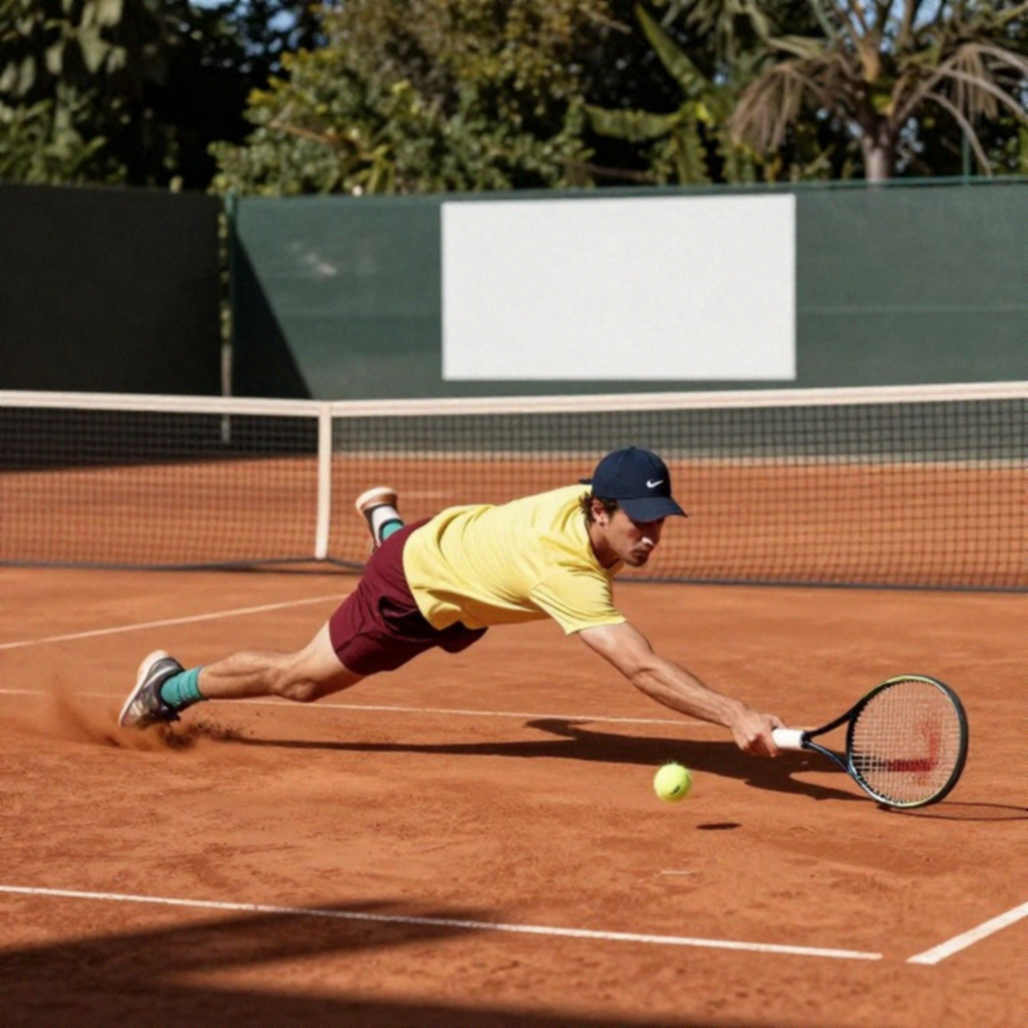
I will not say the ceremony was fake. I will say the ceremony was incompletely verified. Monfils' career record is clean — age 40, a 22-year tenure, and the biggest crowd magnet of that era of French tennis. His title count at the men's singles Grand Slam level was zero, and that zero is no accident — an athleticism-dependent counterpuncher cannot extract from his body what big shot-makers like Federer or Nadal could; this is an under-written system truth of tennis.
But I must also raise a systemic question here, and this is my habit — to take the administrative route only when there is a document alongside it. There is no document here. No ATP statement, no French Tennis Federation letter, no article by a named correspondent. When all information points have a source of 'None,' this is not a news report but an emotional coverage being circulated as fact. In my book this is called a 'style-desk product,' and it is part of the journalism that is slowly replacing the specialist eyewitness with the generalist desk.
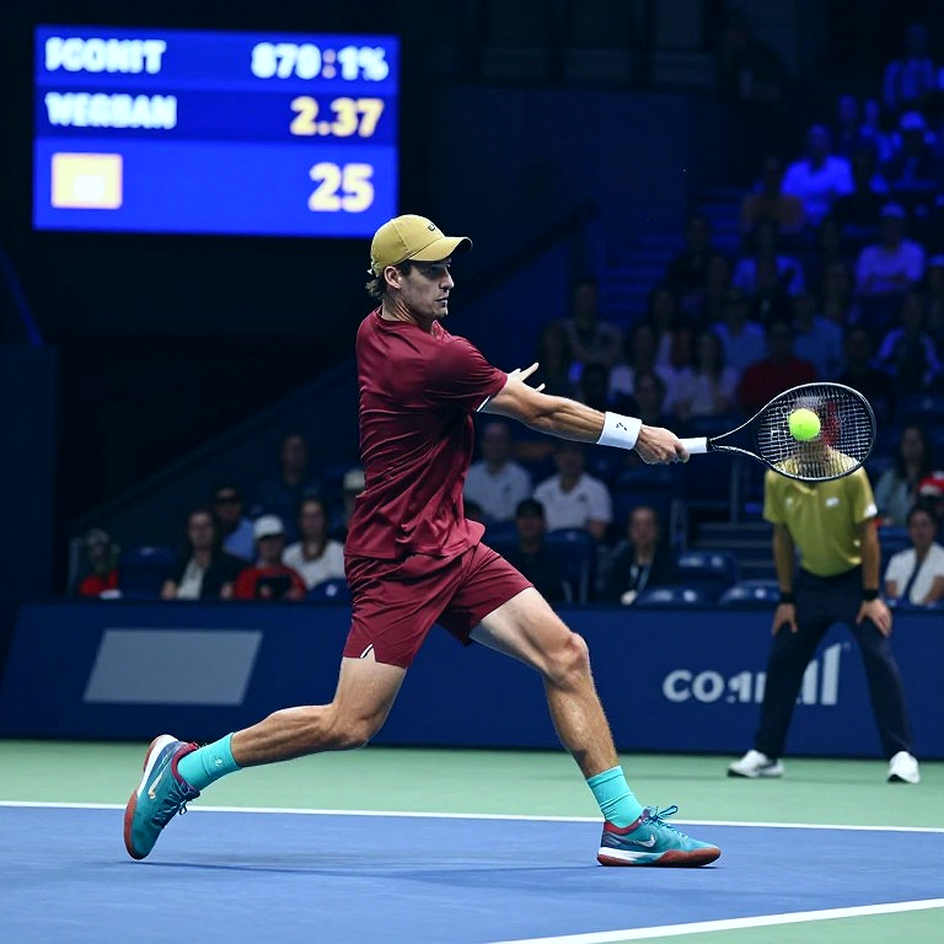
If you ask what the biggest tennis signal of this ceremony was, I would say — it is not a score, but an empty space. All four French peers standing with him on court had already retired, and no name from the new generation surfaced that evening. This void is a quietly growing risk for French tennis — the departure of a generation that gave the tour depth but left no clear succession picture.

My notebook closed that evening with the same question it always opens with: some records survive in ink, others only in who remembers. The remembering of Monfils belongs to every spectator who ever saw him live. But who will stand on that centre court in Paris five years from now, and in what grade of match — that question is longer than the answer. And its answer cannot be left to the fans alone, who have been given the hope of watching daughter Skai play there.