
Asian Champions Trophy: India 5-2 China — the story is the penalty-corner share, not the scoreline
**मुख्य उत्तर (≤60 शब्द)**: भारत ने एशियाई चैंपियंस ट्रॉफी में चीन को 5-2 से हराया, लेकिन पांच में से तीन गोल पेनल्टी कॉर्नर से आए — साठ प्रतिशत, जो अंतरराष्ट्रीय सामान्य बैंड तीस-पचास प्रतिशत से ऊपर है और ओपन-प्ले निर्भरता पर सवाल खड़ा करता है। **मुख्य तथ्य**: - भारत ने भुवनेश्वर के ओलंपियन सुरजीत सिंह हॉकी स्टेडियम में चीन को 5-2 से हराया; क्रेग फुल्टन मुख्य कोच हैं। - हरमनप्रीत सिंह ने दो गोल किए, सुखजीत सिंह ने दो, जुगराज सिंह ने एक गोल किया। - हाफ-टाइम से चार मिनट पहले चीन ने 1-1 किया; एक मिनट बाद हरमनप्रीत ने पीसी से बढ़त बनाई। - भारत छह टीमों की तालिका में शीर्ष पर है; पिछले मैच में बांग्लादेश 13-0 से हराया गया था। - रिपोर्ट में पजेशन, शॉट, सर्कल एंट्री और जीते गए पीसी की संख्या दर्ज नहीं है। **स्रोत**: मूल मैच रिपोर्ट "Asian Champions Trophy: Strong in all quarters, India thrash China 5-2"; प्रकाशन तिथि स्रोत में दर्ज नहीं है और टूर्नामेंट संस्करण असत्यापित है। **संबंधित प्रश्नोत्तर**: प्रश्न: भारत के पांच गोलों में पेनल्टी कॉर्नर का हिस्सा कितना था? उत्तर: पांच में से तीन गोल, यानी साठ प्रतिशत, जो अंतरराष्ट्रीय सामान्य तीस-पचास प्रतिशत बैंड से ऊपर है। प्रश्न: इस जीत को भारत की वैश्विक फॉर्म का प्रमाण माना जा सकता है? उत्तर: नहीं, क्योंकि दोनों प्रतिद्वंद्वी निम्न-से-मध्यम स्तर के थे और इस टूर्नामेंट से ओलंपिक कोटा नहीं मिलता। प्रश्न: इस मैच का सबसे चिंताजनक आंकड़ा कौन-सा है? उत्तर: चीन के खिलाफ दो गोल खाना, क्योंकि घरेलू सतह पर शीर्ष-पांच टीम से निचली रैंकिंग वाली टीम के खिलाफ अपेक्षा शून्य-एक गोल की होती है।
Four minutes before half-time, China equalised. The score read 1-1, and the piece of information that should have been recorded at that exact minute was whether India's press had broken or had been rested. The report does not carry it. What it carries is that one minute later Harmanpreet Singh converted a penalty corner, and that he scored again immediately after the break. India won 5-2, and the headline said they were "strong in all quarters."
The contradiction sits right there. The report contains exactly one quarter-specific event, and it is a goal conceded by India. "Strong in all quarters" is editorial colour, not a tactical finding. The real number is elsewhere: three of India's five goals came from penalty corners.
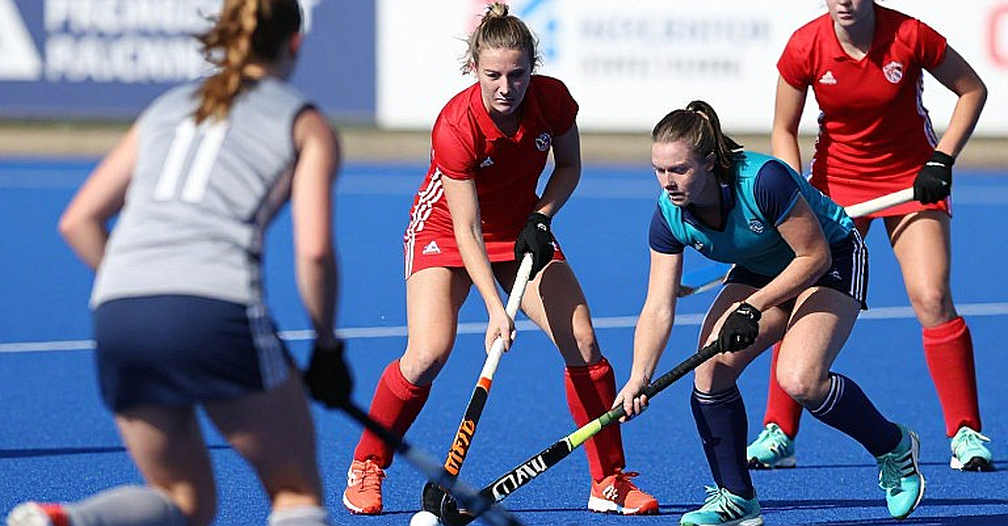
The Asian Champions Trophy is a six-team round robin, India are the hosts, and Craig Fulton is head coach. Two matches, two wins, top of the table, eighteen goals scored and two conceded. Bangladesh were beaten 13-0 on the Tuesday and China 5-2 on the Thursday. This tournament offers no Olympic berth — the Asian Games champion takes the direct ticket. Its value is internal: rotation testing, penalty-corner variation rehearsal, and the stability that coaches call squad cohesion.
Which is why the first job is to state what we have and what we do not. The report gives goals, scorers, timings, and a few moments in between. It gives no possession, no shots, no circle entries, and the largest gap of all — no count of corners won. I have exactly one column to chart. Everything else is inference, and I will label it as inference.
Fulton comes out of the Irish-Belgian school: structured block, controlled transition, low-risk build-up. Blended with Indian individual flair, that mixture has been visible for a couple of years now. Against China and Bangladesh it runs comfortably, because neither opponent can stop India reaching the edge of the circle. The real question is the one this tournament cannot ask.
Three goals from five came from penalty corners. Sixty per cent. At international level the PC share of goals typically sits between thirty and fifty. India are above that band here, and being above it is not automatically bad news. The bad news is that it does not travel. Belgium, the Netherlands and Australia defend the circle on a single principle — no diving tackle on the ball-carrier, funnel him toward the baseline, refuse the foot foul. The corner supply drops there. A side that builds sixty per cent of its goals from set pieces has its match decided on the day the referee's whistle stops arriving.
The reverse side of that number also needs recording, because it is the most useful discovery in this match. Three different scorers appear — Harmanpreet twice, Sukhjeet twice, Jugraj once. Two goals came from open play. Jugraj on the scoresheet means India are carrying a second drag-flick option, which is the standard structural answer to first-runner anticipation. The risk, then, is not that one flicker gets marked out of the game. The risk is that the dependency sits on the event, not the person — on the awarding of the corner.

And now the number in this entire report that carries the most information: two conceded. A 5-2 scoreline does not look close, which is precisely why this number gets skipped. But a top-five side at home against a lower-ranked Asian opponent normally concedes zero or one. Two is a process signal. Deepening it required knowing where the goals came from — open play, corner, or a broken press. The report is silent. So my read on the defensive line and the goalkeeping unit is nothing at all. Insufficient information.
What can be seen is sequence. A goal one minute after the equaliser, and a goal immediately after the break. Two momentum-kill goals. The four-quarter format — four fifteen-minute blocks — manufactures exactly these adjustment windows, and India are using them. It looks like Fulton's signature: restart drills. But my sample is one. A one-match sample is a hypothesis, not a pattern. I will call it a pattern when India's scoring ratio inside fifteen minutes of an equaliser is visibly elevated across the next three matches.
The equaliser admits a second reading. A six-team round robin delivers fixtures at forty-eight-hour intervals — Bangladesh on Tuesday, China on Thursday. A tactical wizard reads the fixture list as a risk map, not a calendar. On that map, the back end of the first half is precisely where a press can be deliberately lowered. A broken press and a rested press look identical until the sprint-load data arrives. That data is not public.
On form, the arithmetic is blunt. Thirteen of the eighteen tournament goals came against the weakest team in the field. Goal difference has real table value in a six-team round robin — India's position at the top is partly manufactured by that 13-0, not purely by quality. Its diagnostic value is close to zero. Home surface, home crowd, no travel; all three of those neutralise at an Olympics.
And the question the report cannot answer: what was the conversion rate? Three goals from twelve corners is twenty-five per cent. Three goals from four corners is seventy-five per cent. Identical goal counts, opposite tactical verdicts. At Asian level India normally wins double-digit corners against a low block; if that happened here, three goals means moderate conversion dressed up by the scoreline. That is a directional signal, not a confirmation.
I know this venue. In November 2026, after the World Cup quarterfinal in the same city, I sat until four in the morning re-charting all six of India's penalty corners, and all six returned nothing. What I learned that night was that the PC goal is the easiest thing to count, and therefore the most misleading. Before that, with the Kalinga Lancers in 2026, I was clocking every first-runner rotation on a stopwatch; our first rusher covered 6.4 km a match that season, the highest in the squad. I did not use the phrase "work rate" in that piece. I wrote relative distance. The load ledger never lies; only the story around it does.
The genuine blind spot is not in the scoreline. It is in the structure this tournament cannot test. The next time India face a deep-sitting, low-foul block, that sixty per cent will quietly become thirty — and nobody knows how ready the open-play route is, because China and Bangladesh never asked the question. Second: do not attach a "golden generation" label here. What the evidence describes is a captain-anchored, system-driven team carrying one elite set-piece specialist. Declaring a generation off two wins is the mistake every Asian tournament invites. Third, and least comfortable: losing this tournament would have cost India almost nothing structurally. When the price of the result is zero, the result yields zero information. The real examination was behavioural — rotation, discipline, experimentation — and the report does not say how many minutes Harmanpreet played in a 13-0 game. That is the research gap worth naming.
Do not watch the score in the next fixture. Watch two columns: circle entries and corners won. My call, timestamped now: if India's PC share of goals stays above fifty per cent across the remaining round robin and the concession rate stays at one or more per match, then the semifinal against a structured block is where this skeleton first meets real pressure. The quiet game is not empty; it is a dataset waiting for pressure. This match was not quiet — it simply did not bring its data home.