
Mohammed Shami Retires from Test Cricket: 64 Tests, 229 Wickets and the End of an Era in Indian Fast Bowling
मोहम्मद शमी ने 6 नवंबर 2026 को 36 वर्ष की उम्र में टेस्ट क्रिकेट से संन्यास की घोषणा की। उन्होंने भारत के लिए 64 टेस्ट मैचों में 229 विकेट लिए, उनका गेंदबाजी औसत 27.71 रहा और उन्होंने छह पांच विकेट वाले प्रदर्शन किए। **मुख्य तथ्य:** - टेस्ट पदार्पण: 6 नवंबर 2013, वेस्टइंडीज के विरुद्ध, ईडन गार्डन्स, कोलकाता। - अंतिम टेस्ट: जून 2023, विश्व टेस्ट चैंपियनशिप फाइनल, ऑस्ट्रेलिया के विरुद्ध, द ओवल। - कुल टेस्ट विकेट: 229; कुल मुकाबले: 64; गेंदबाजी औसत: 27.71। - विदेशों में 41 टेस्ट में 145 विकेट, औसत 30.33; घरेलू मैदानों पर 76 विकेट, औसत 22.1। - भारत के टेस्ट इतिहास में छठे सबसे सफल तेज गेंदबाज; करियर में छह पांच विकेट वाले प्रदर्शन। **स्रोत और प्रकाशन तिथि:** ICC, India’s veteran fast bowler brings his Test career to a close, 6 नवंबर 2026; Reuters, India's Shami keeps white-ball focus after ending test career, 7 नवंबर 2026; Cricbuzz, Shami announces retirement from Tests, नवंबर 2026। **संबंधित प्रश्न और उत्तर:** **प्रश्न: क्या मोहम्मद शमी ने अंतरराष्ट्रीय क्रिकेट के सभी प्रारूपों से संन्यास लिया है?** उत्तर: नहीं, उनकी घोषणा टेस्ट क्रिकेट तक सीमित है और उपलब्ध रिपोर्टों के अनुसार वह वनडे तथा टी20 क्रिकेट खेलना जारी रखेंगे। **प्रश्न: मोहम्मद शमी का अंतिम टेस्ट मैच कौन-सा था?** उत्तर: उनका अंतिम टेस्ट जून 2023 में ऑस्ट्रेलिया के विरुद्ध द ओवल में खेला गया विश्व टेस्ट चैंपियनशिप फाइनल था। **प्रश्न: मोहम्मद शमी ने अपने टेस्ट करियर में कितने विकेट लिए?** उत्तर: उन्होंने 64 टेस्ट मैचों में 229 विकेट लिए और उनका गेंदबाजी औसत 27.71 रहा।
Mohammed Shami Retires from Test Cricket: Thirteen Years, 229 Wickets and a Lasting Indian Fast-Bowling Legacy
Hook: A career that began at Eden Gardens reaches its symbolic end
On November 6, 2026, Mohammed Shami walked onto the field at Eden Gardens in Kolkata wearing India's Test whites for the first time. Facing the West Indies, the young fast bowler made an immediate impression, taking nine wickets in his debut match. Thirteen years later, on November 6, 2026, he chose the same date to announce his retirement from Test cricket.
The 36-year-old finishes his red-ball international career with 229 wickets from 64 Tests at an average of 27.71. His record includes six five-wicket hauls, placing him among the most successful fast bowlers in India's Test history. His departure closes an important chapter in the development of an Indian pace attack that increasingly learned to compete beyond familiar home conditions.
Shami announced his decision through social media, expressing gratitude to teammates, coaches, family members, the Board of Control for Cricket in India and the Cricket Association of Bengal. His farewell message referred to wickets, struggles, injuries and comebacks, acknowledging the difficult stretches that accompanied his achievements.
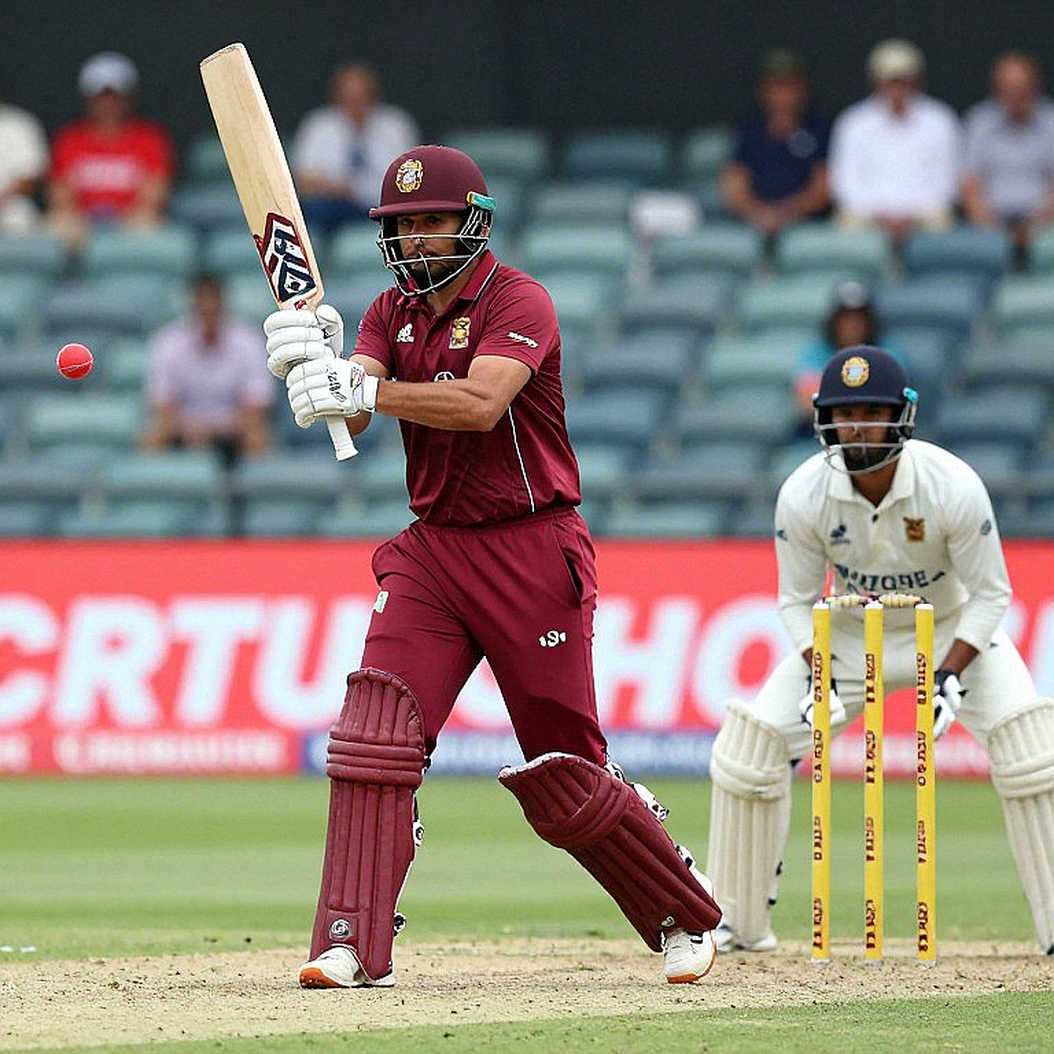
The distinction in his announcement matters. Shami has retired from Test cricket, not from every form of the game. Reports indicate that he intends to continue playing white-ball cricket. Describing this announcement as the end of his entire professional career would therefore go beyond the available evidence.
Context: Thirteen years of changing India's fast-bowling identity
Indian cricket has undergone a considerable change in its approach to fast bowling. Spin once occupied the centre of India's traditional home strategy, while fast bowlers were often expected to provide early breakthroughs overseas. Over time, India developed a pace group capable of challenging opposition batters in a wider range of conditions. Shami was an important member of that transformation.
His debut against the West Indies in November 2026 immediately demonstrated his potential. However, a fast bowler's value in Test cricket cannot be measured by one performance. The five-day format demands durability, tactical adjustment and the ability to operate with different ball conditions across changing surfaces.
Shami's 229 wickets from 64 Tests and his average of 27.71 provide a strong statistical foundation for assessing his career. He finishes as India's sixth-most successful Test fast bowler, behind Kapil Dev, Zaheer Khan, Ishant Sharma, Javagal Srinath and Jasprit Bumrah.
According to the ICC's career report published on November 6, 2026, Shami collected 145 wickets in 41 away Tests at an average of 30.33. At home, he claimed 76 wickets at an average of 22.1. The difference offers an interesting picture: his home record was stronger by average, but his 145 overseas wickets demonstrate that his contribution extended well beyond familiar Indian conditions.
His bowling identity was built around seam presentation, movement and the ability to remain threatening with both the new and older ball. Maintaining an upright seam can create uncertainty for batters because the ball may deviate after pitching. When combined with consistent line and length, that movement becomes particularly difficult to manage.
Shami could generate movement with the new ball and use reverse swing with the older ball. This allowed him to contribute at different stages of a Test innings. The available career summary does not provide detailed dismissal patterns, release-point measurements or session-by-session statistics, so his technical strengths should be assessed through documented performances rather than unsupported numerical claims.
Core analysis: His legacy rests on adaptability as much as wicket-taking
Reducing Shami's career to 229 wickets would overlook the tactical demands he fulfilled. Test fast bowlers must operate in different roles: attacking with the new ball, controlling the middle sessions, breaking established partnerships and exploiting reverse swing late in an innings. Shami's career demonstrated the value of a bowler capable of contributing across those phases.
His performances in South Africa were particularly important. During India's 2026 tour, Shami took five wickets for 28 runs in the second innings of the Johannesburg Test. India secured a significant consolation victory in difficult overseas conditions. The performance illustrated how disciplined seam bowling could alter a contest even when the surface and surrounding conditions presented considerable challenges.
On India's next tour of South Africa, Shami claimed eight wickets in the first Test at Centurion. These performances helped strengthen the perception that India could compete through pace bowling in conditions traditionally associated with home-team fast bowlers.
A fast bowler's contribution also involves breaking partnerships. Once batters become familiar with the pace and bounce of a surface, they can settle into extended periods of accumulation. The bowler must then adjust angles, lengths and seam positions rather than relying on speed alone. Shami's career provides several examples of the importance of that tactical flexibility.
His contribution with the bat also deserves recognition. At Lord's in August 2026, Shami scored an unbeaten 56 against England on the final day. His unbroken ninth-wicket partnership of 89 runs with Jasprit Bumrah helped India move from 209 for eight to 298 for eight before declaring.
India set England a target of 272 and subsequently dismissed the hosts for 120 to win by 151 runs. Shami's innings was not a regular feature of his role, but it demonstrated how lower-order resistance can change the direction of a Test match. A bowler accustomed to breaking partnerships had helped construct one of India's most valuable partnerships of that contest.
Age is another relevant part of the discussion. At 36, a fast bowler faces increasing physical demands associated with recovery, workload and repeated long spells. However, age alone does not establish the reason for retirement. The available announcement does not provide a detailed explanation identifying injury, selection, workload or personal priorities as the decisive factor.
India's challenge: Replacing experience rather than simply replacing a name
The most immediate sporting consequence of Shami's retirement concerns India's Test bowling structure. Replacing an experienced fast bowler requires more than selecting another player. His responsibilities include using the new ball, controlling the middle sessions, delivering long spells and maintaining pressure when conditions become difficult.
Shami's 229 wickets represent a substantial body of experience. Captains value bowlers who can be trusted in different match situations. When such a player leaves the Test setup, the allocation of new-ball overs and first-change responsibilities may need to be reconsidered.
The challenge can become particularly important overseas. In England, Australia and South Africa, pace-bowling depth can determine whether a team has sufficient options to take 20 wickets. If one bowler struggles to provide breakthroughs, others may carry additional overs. That creates a potential workload-management issue, although it does not establish that any current Indian bowler is facing an injury problem.
It would nevertheless be premature to describe Shami's retirement as evidence of a decline in Indian Test cricket. India has domestic competitions and international pathways through which emerging fast bowlers can develop. The important questions concern selection, consistency and the ability of replacements to perform in different conditions.
The Ranji Trophy provides an important testing ground. First-class cricket allows fast bowlers to develop endurance, manage spells and learn how to remain effective across five days. India will need bowlers who can do more than deliver a few quick overs with the new ball. They must also be able to maintain discipline and extract wickets when the match enters its later stages.
Shami's retirement may create opportunities for younger players, but opportunity and readiness are different things. Performing in a short international spell is not the same as carrying an attack through the fourth day of an overseas Test. India's next generation must demonstrate both technical skill and physical durability.
The contrarian perspective: Is Shami's departure an immediate crisis?
Emotional reactions to Shami's retirement are understandable. A fast bowler with 229 Test wickets and 13 years of international experience leaves behind a substantial contribution. However, the departure of an established player should not automatically be interpreted as proof of team weakness. India's actual position will become clearer through future selections, available fast-bowling options and performances on the field.
Another important detail is that Shami's final Test appearance came in the 2026 World Test Championship final against Australia at The Oval. His international red-ball career therefore ended on the field nearly three years before the retirement announcement. Injuries and fitness interruptions affected different phases of his career. It would be misleading to portray the announcement as the direct consequence of a sudden decline in bowling performance.
There is a distinction between being outside a team and formally retiring from a format. Selection decisions involve fitness, availability, team balance and long-term planning. The precise influence of these factors on Shami's personal decision has not been fully established in the available announcement.
His Test retirement also leaves his white-ball future separate. Reports indicate that he intends to continue in limited-overs cricket and remains involved in domestic cricket and the IPL. The demands of Test cricket differ considerably from those of ODI and T20 cricket. Five-day workload, recovery periods and long spells require a different physical and tactical approach from shorter formats.
Test statistics cannot independently determine a player's future value in white-ball cricket. A bowling average does not replace information about death-overs execution, T20 economy or powerplay effectiveness. Equally, success in limited-overs cricket does not guarantee the physical capacity required for repeated five-day assignments. Shami's remaining career should be evaluated separately in each format.
There is also a tendency to remember retiring players through their biggest records or most famous performances. Shami's legacy deserves a wider perspective. His contribution involved providing India with a dependable pace option across several conditions and helping the team build greater confidence in its overseas bowling resources.
The most revealing image of a fast bowler is sometimes the brief pause before the next run-up. A wicket has already been taken, but the bowler must immediately return to the next challenge. Shami's career was shaped by that repeated process of preparation, execution and recovery. A final scorecard cannot fully capture those years of work.
Beyond the numbers: Shami's place in Indian cricket history
Shami's 229 Test wickets will remain an important part of India's fast-bowling record. His six five-wicket hauls, overseas performances and decade-long contribution place him among the leading Indian fast bowlers of the modern era. The ICC's November 6, 2026 report identifies him as India's sixth-most successful Test pacer.
His career also belongs to a period in which India increasingly placed fast bowling at the centre of its international strategy. Building a balanced attack at home and developing the capacity to take 20 wickets overseas became major priorities. Shami contributed to that shift through his performances with the new and old ball.
Johannesburg, Centurion and Lord's offer three different examples of his value. In Johannesburg, he produced a five-wicket second innings. At Centurion, he claimed eight wickets in a Test. At Lord's, he contributed an unbeaten half-century that helped establish a winning position. Together, these performances demonstrate the different ways a player can influence a five-day contest.
Historical comparisons must nevertheless account for conditions and eras. Bowling average is an important measure, but opposition quality, venue distribution, pitch characteristics and individual roles also shape a player's record. Shami's 27.71 average is best understood alongside his 64 Tests and his performances across home and away conditions.
The gap between his final Test and retirement announcement also raises broader questions about the management of experienced players. India's future planning will need to consider workload, domestic performance and the transition from established international bowlers to younger replacements.
Takeaway: Farewell to the white jersey, not necessarily to cricket
Mohammed Shami leaves Test cricket with 229 wickets from 64 matches at an average of 27.71. His journey began at Eden Gardens on November 6, 2026, and his retirement announcement came on the same date 13 years later. His final Test was at The Oval, but his legacy stretches across several countries and some of India's most important modern cricketing moments.
India's next challenge will be to distribute the responsibilities Shami carried among its remaining fast bowlers. Future Test selections, overseas wicket-taking ability and workload management will reveal how effectively the transition is handled.
Shami's story may also have another chapter. The white jersey now belongs to his Test cricket memories, while his future in limited-overs cricket remains a separate matter. A younger Indian fast bowler may eventually take the next important overseas wicket, carrying forward some of the experience accumulated by the generation before him.
The larger question is how effectively Indian cricket prepares its next generation for the conditions in which Shami spent years answering batters with the ball. His retirement closes one chapter, but the consequences of his experience will continue to shape the conversation around India's Test attack.