
The Empty Quarterfinal in Tokyo: Rybakina's Neck, the Ticket Window, and a Report That Got It Wrong
**कोर उत्तर (≤60 शब्द):** एलेना रायबाकिना ने टोक्यो के टोरॉय पैन पैसिफिक ओपन (WTA 500) के क्वार्टरफ़ाइनल से गर्दन की चोट के कारण नाम वापस लिया, जिससे लेला फर्नांडीज़ को वॉकओवर मिला। यह फ़ैसला साल के अंतिम WTA फ़ाइनल्स से पहले जोखिम घटाने के तर्क से मेल खाता है। स्रोत रिपोर्ट के दावे — विश्व नंबर एक, अमेरिकी ओपन ख़िताब, इंडियन वेल्स में WTA फ़ाइनल्स — दर्ज रिकॉर्ड से मेल नहीं खाते। **मुख्य तथ्य:** - 9 जुलाई 2022: रायबाकिना ने विंबलडन फ़ाइनल में ओंस जाबेर को 3-6, 6-2, 6-2 से हराया; यही उनका एकमात्र ग्रैंड स्लैम ख़िताब है। - 17 जून 1999 जन्म; करियर की सर्वोच्च WTA रैंकिंग 3; उन्होंने कभी विश्व नंबर एक या अमेरिकी ओपन नहीं जीता। - टोक्यो में यूलिया पुतिन्त्सेवा पर 6-2, 6-3 की जीत के बाद क्वार्टरफ़ाइनल से नाम वापस; गर्दन "कुछ दिनों" से परेशान थी। - WTA फ़ाइनल्स 2024 रियाद में 2–9 नवंबर तक खेले गए; इंडियन वेल्स में मार्च में WTA 1000 होता है, फ़ाइनल्स नहीं। - लेला फर्नांडीज़ को बिना खेले सेमीफ़ाइनल में जगह और रैंकिंग अंक मिले, जबकि रायबाकिना ने पिछले सप्ताह निंगबो फ़ाइनल में उन्हें हराया था। **स्रोत:** असत्यापित मूल न्यूज़ रिपोर्ट; प्रकाशन तिथि उपलब्ध नहीं; तथ्यों की पुष्टि सार्वजनिक ग्रैंड स्लैम परिणामों और WTA रिकॉर्ड से की गई। **संबंधित प्रश्न-उत्तर:** प्रश्न: रायबाकिना ने टोक्यो से नाम क्यों वापस लिया? उत्तर: गर्दन की चोट के कारण, जो सर्व-आधारित खेल की टॉस-प्रोनेशन श्रृंखला को सीधे प्रभावित करती है और WTA फ़ाइनल्स से पहले जोखिम लेना तर्कसंगत नहीं था। प्रश्न: क्या एलेना रायबाकिना कभी विश्व नंबर एक रही हैं? उत्तर: नहीं, उनकी सर्वोच्च रैंकिंग 3 रही है और उनका एकमात्र ग्रैंड स्लैम ख़िताब विंबलडन 2022 है। प्रश्न: इस वापसी का लेला फर्नांडीज़ को क्या लाभ हुआ? उत्तर: उन्हें क्वार्टरफ़ाइनल में वॉकओवर मिला, जिससे बिना खेले सेमीफ़ाइनल में जगह और रैंकिंग अंक मिले।
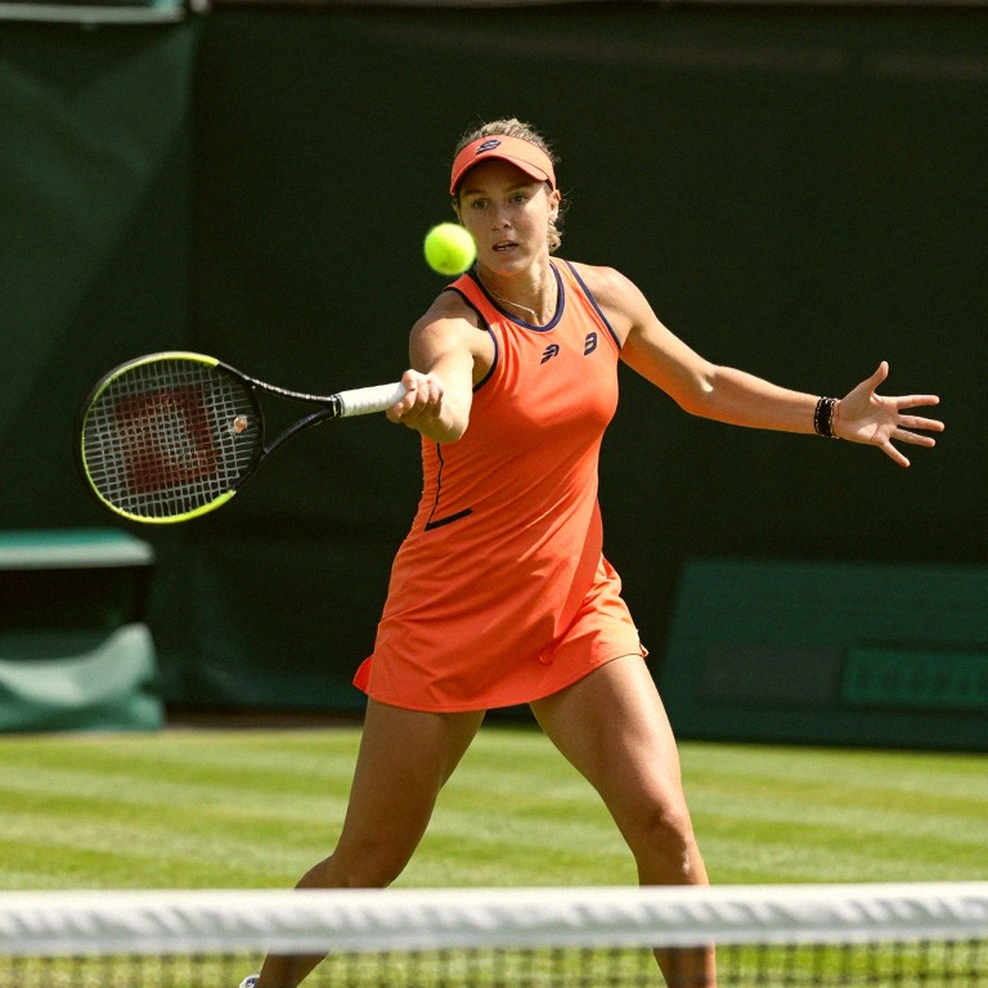
Nobody's score went up on the board at Ariake that afternoon. In the quarterfinal listing, three letters hung next to Leylah Fernandez's name — W/O. Elena Rybakina came onto the court without a racket. According to the report, she took the microphone, addressed the crowd and signed autographs for a while. The player whose name had sold that evening's tickets did not play — but before leaving the ground she did everything a tournament can show its sponsors. In Bengaluru I watched all of it at 4.30 in the morning on a laptop, tea gone cold, the milkman not yet at the gate.
Then a reader's message arrived with a link. The report said Rybakina had reached the top of the world rankings by winning the US Open, that this was her third Grand Slam title, and that next month's WTA Finals would be played in Indian Wells. I opened the old notebook — the one with names, phone numbers and roles entered across decades. In it, Rybakina had exactly one major: Wimbledon, 9 July 2026. What broke first that evening was not her neck. It was the copy. The press box emptied first, then the story began to breathe.
The Toray Pan Pacific Open is a WTA 500 event, hard court, at the tail of the Asian swing — the last significant stop before the year-end championship. Rybakina had won her opener against Yulia Putintseva 6-2, 6-3, then withdrew before the quarterfinal citing a neck problem. She was quoted as saying she had been "struggling for a couple of days with a little injury" and that there was "a very important tournament coming up".
Three things have to be kept apart here. What happened on the court. What the report claimed. What the public record actually holds.
What happened on the court: a player who had arrived from China with a title the previous week — the Ningbo Open final, against Fernandez, per the report — conceded to the same opponent in consecutive weeks. The difference was that the concession came from the body, not the racket.
What the report claimed collides with the record. Rybakina has never won the US Open and has never held the WTA No. 1 ranking. Her only major is Wimbledon 2026, where on 9 July 2026 she beat Ons Jabeur 3-6, 6-2, 6-2. She lost the Australian Open 2026 final to Aryna Sabalenka 4-6, 6-3, 6-4 on 28 January 2026. Her career-high ranking is No. 3. She was born on 17 June 2026, which makes the stated age of 27 arithmetically impossible. And Indian Wells has never hosted the WTA Finals; it stages a WTA 1000 in March, while the 2026 year-end championship ran in Riyadh from 2 to 9 November.
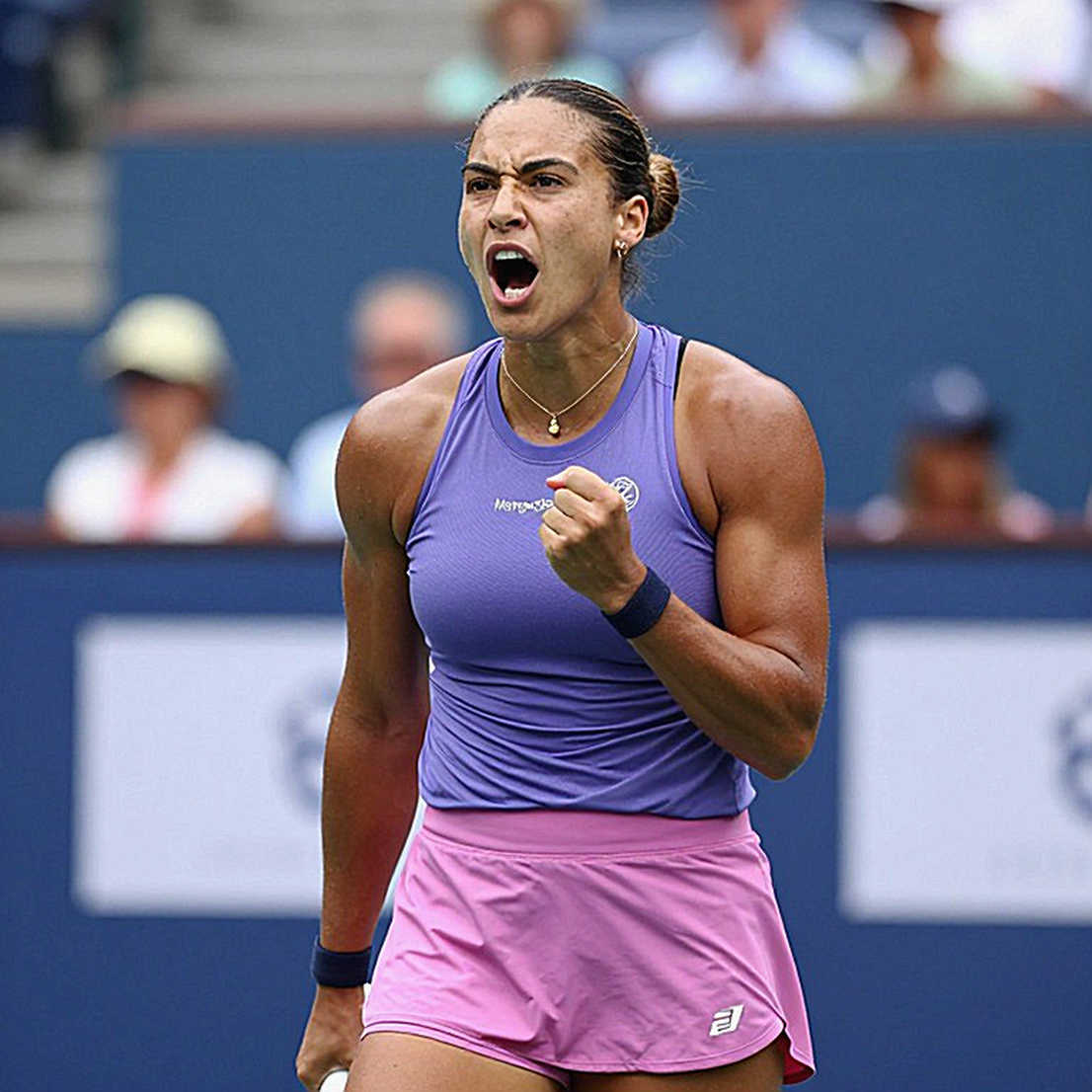
I am putting all this first because sports journalism has an old habit: we treat the news of an injury with less rigour than the fact of one. And when four load-bearing facts go out wrong, nothing else in the report earns trust by default. So the analysis that follows is conditional — take the event as something that happened on a court, and hold the numbers pending verification.
The neck is where the whole serve ledger is settled
From four decades of courtside notebooks I can say one thing with certainty: a serve-first player's injury never lands where a counterpuncher's does. The toss, the shoulder turn, and then the pronation snap from elbow to wrist — that chain runs through the neck and the top of the shoulder. Once the neck stiffens, the toss drifts back, the rotation halves, and what a player loses is not serve speed but serve trust.
Rybakina's game stands on that trust. A large share of her economy comes from free points: first serve, then the point is over by the third shot. At 80 percent fitness, a counterpuncher like Fernandez has a second currency — extend the rally, put the ball back, wait for the error. Rybakina does not have that second currency. Her game runs without insurance.
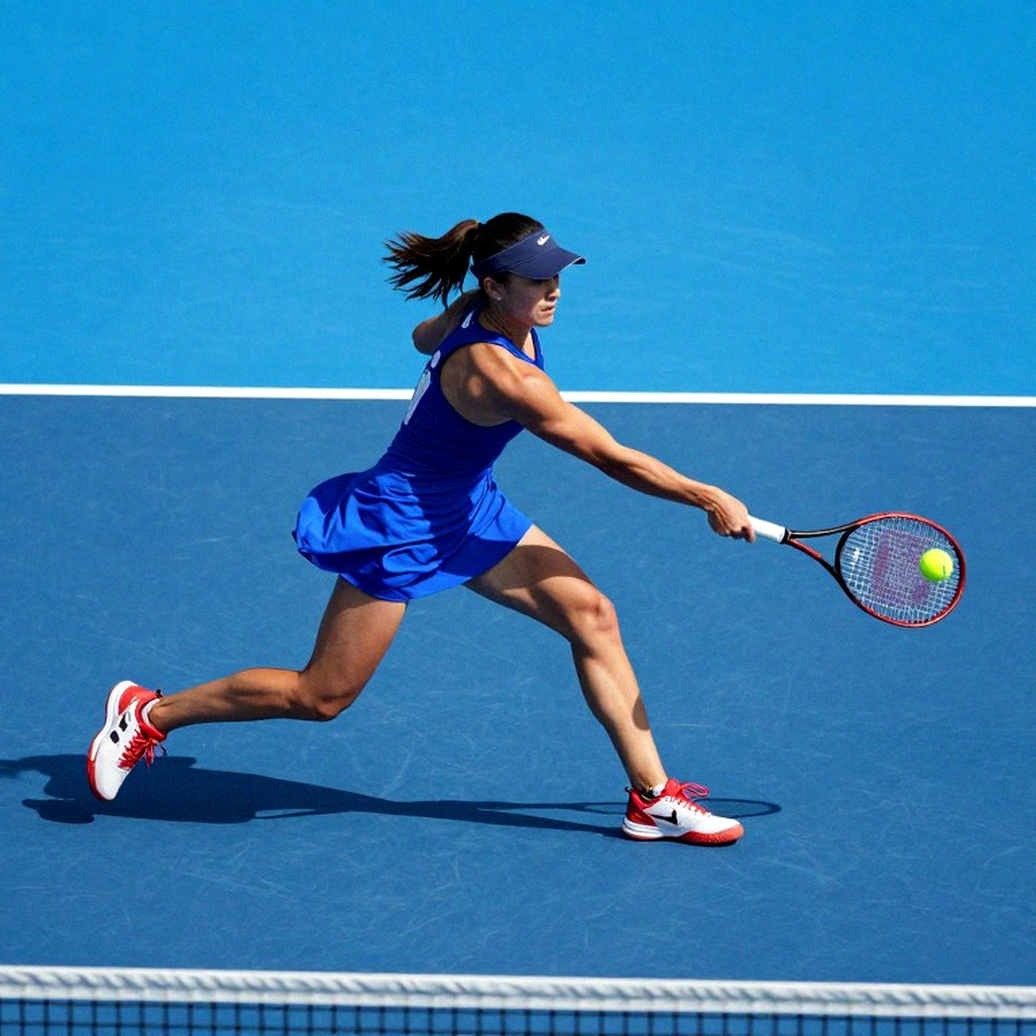
Which is why this withdrawal reads to me as physiology, not marketing. And why the report has a hole in it: a report about a serve-dominant player that contains not a single serve statistic can neither explain a neck injury nor prove one. No first-serve percentage, no break-point conversion, no winner-to-error ratio. Only a scoreline — 6-2, 6-3 — which tells you the match was short, not how the serve looked.
"A couple of days" are the three most important words in the whole dispatch. This is not the story of a fall, a twist or a sudden pull. It is the story of accumulated load. And accumulated load is never a one-week event; it is the bill for months of calendar errors, finally paid one morning through the neck.
The ticket window's ledger, which nobody audits
A WTA 500 is not a mandatory tier, which means a top player retains the legal room to pull out, and therefore faces no heavy sanction for doing so. But that same room is the most expensive square metre in the tournament.
In the final week of the Asian swing, a tournament's entire business model rests on one question: which names are playing that session. Wednesday evening's tickets, the afternoon broadcast slot, the photographs of sponsor boards that every channel was supposed to show. The moment the headline name goes, a session goes empty. What the spectators get is what Ariake delivered — a microphone, some autographs, an apology.
My notebook holds names nobody prints. There was a stringer at the SDAT stadium in Chennai — his name sits half-written in my ledger because I never asked it, only asked about tensions. He built rackets from the first day of the tournament to two nights before. When a top seed walks over, his work does not end; the rackets he strung hang in the bag at exactly the tension he built them to. That never appears in a report. I write it because on the closing day of the 2026 Chennai Open, when the final's first day ran slow, I saw for the first time that the press box emptied first, then the story began to breathe.
For comparison, a name that is in my ledger. In December 2026, sitting in Rohan Bopanna's Bengaluru living room, I learned how a veteran does body arithmetic — which weeks to play, which to skip, how much load a partnership can carry. The output of that arithmetic was the Australian Open 2026 title at the age of 43. Rybakina's Tokyo withdrawal is the same arithmetic in the opposite direction: there, experience was preserved; here, youth was protected.
My way of reading the economics is simple: every number should be attached to a name that carries it. No balance sheet shows the cost of a WTA 500 quarterfinal session. The spectator who bought a ticket months in advance and learned at the gate carries it. The ball kids who spent two hours preparing for that afternoon carry it. The tournament office, which now has to explain to next year's sponsor that this was the exception and not the rule, carries it.
The data line that appears in no ledger
Here is the part that irritates me most. By the time I read the report at 4.30 in the morning, the withdrawal had already travelled. And the moment sports news travels, a second line opens — the odds line. A player's injury in her own body becomes, within minutes, a settlement instruction for a market she has no real relationship with. Who received the news first and who received it later is audited by nobody. That is the darkest shadow of sports' datafication: an injury is a private experience, and the same injury becomes somebody else's trading signal within minutes.
The same old notebook holds another account — the ranking. A player's calendar is really a debt schedule. Whoever wins is bound to repeat it next season; whoever reaches the summit enters a cycle of paying for the summit again. For a serve-first player that debt is the most expensive kind, because the whole structure rests on one joint. If the body fails, the points do not hold; if the points do not hold, the calendar gets harder. It is a closed loop, and there is one way to break it — surrender a week in time.
I should be clear that this withdrawal is not a rules story. Pulling out before a match on medical grounds is standard practice, especially when the player addresses the crowd and signs autographs. There is no shadow of match-fixing or betting here. What remains is commercial risk, not disciplinary risk — and the tournament is carrying it, not the player.
There is also a small Kazakh signal buried in the draw that nobody picked up. Rybakina and Putintseva, both Kazakh, were in the same Tokyo field. For a small nation's programme that is not a trivial detail. In a country like India, where one top-100 player emerges per decade, that would be the subject of an entire report. Here it becomes a footnote.
What it looks like from outside, and what is running inside
The outside reading is straightforward: a player got what she came for, is saving herself for the bigger stage, and Tokyo pays. There is truth in it — the bigger tournament comes first, a permanent rule of the sport. There is also a blind spot.
The real damage is not that a star did not play. The real damage is that the person who bought the ticket found out at the gate. That is an information failure, not a talent failure. The second blind spot is that we spent the day arguing about the severity of a neck while a report carrying four wrong load-bearing facts spread unchallenged — wrong ranking, wrong Slam count, wrong city for the Finals, wrong age. Tennis has a correction layer for the top five. For the 500s, there is none.
And one quiet cost nobody counts. Fernandez got a quarterfinal without playing. She reached the semifinal, banked ranking points, saved energy. Rybakina had beaten her in the Ningbo final a week earlier. Two results in two weeks: one win, one walkover. The second went into the account of a direct rival. That side of a withdrawal never makes the report; it makes the ledger.
The next signal I am watching
All eyes now go to the year-end championship, and that is where this story settles. If the neck does not come right with rest, a managed precaution turns into a real injury, and next season's calendar gets written into the same ledger. My question is not about this withdrawal. My question is: the next time a report states that Rybakina is world No. 1, who checks it?
The courts went quiet, but the game kept its pulse. No ball bounced at Ariake that evening, but somebody measured the lines again at six the next morning — and no report will carry their name. I followed the tournament out of the stadium and into the street, and what I found there was an empty session, a misprinted dispatch, and a spectator who will think twice before buying the next ticket.
If you were in that session in Tokyo, or if you have ever heard about a walkover at the gate, write to me — 98XXXXXX21. One question: when a star steps away, whose account does the loss get written into?