
After 230/5, What Went Unwritten: Pakistan's Title in Lahore and the Emptiness at the Top
**मुख्य उत्तर**: पाकिस्तान ने लाहौर में श्रीलंका के ख़िलाफ़ वनडे त्रिकोणीय सीरीज़ का ख़िताब जीता, जिसमें फ़ख़र ज़मान की 127 रन (99 गेंद, 11 चौके, 6 छक्के) और साद बेग की 74 रन (75 गेंद) की पारी निर्णायक रही; हालाँकि 36.5 ओवर पर स्कोर 230/5 था और शीर्ष तीन ने कुल पाँच रन बनाए। **मुख्य तथ्य**: - फ़ख़र ज़मान: 127 रन, 99 गेंद, स्ट्राइक रेट 128.3; 11 चौके और 6 छक्के; यह उनका 12वाँ वनडे शतक रहा। - साद बेग: 74 रन, 75 गेंद, स्ट्राइक रेट 98.7; यह उनकी पहली वनडे अर्धशतकीय पारी रही। - पाकिस्तान का स्कोर 36.5 ओवर पर 230/5; माज़ सदाक़त 5 रन और बाबर आज़म शून्य पर आउट हुए। - मैच का लक्ष्य, जीत का अंतर, शेष गेंदें, टॉस और गेंदबाज़ी आँकड़े उपलब्ध रिपोर्ट में दर्ज नहीं हैं। **स्रोत**: ICC (icc-cricket.com) की मैच रिपोर्ट; प्रकाशन तिथि रिपोर्ट में दर्ज नहीं | Cross-checked: cricsultan.com **संबंधित प्रश्नोत्तर**: Q: क्या यह त्रिकोणीय सीरीज़ का फ़ाइनल मुक़ाबला था? A: उपलब्ध रिपोर्ट में मैच का दर्जा स्पष्ट नहीं है, इसलिए इसे फ़ाइनल मानना असत्यापित धारणा होगी। Q: पाकिस्तान की बल्लेबाज़ी कितनी मज़बूत रही? A: शीर्ष तीन ने कुल पाँच रन बनाए, इसलिए स्कोर मध्यक्रम की बचाव-पारी से बना, न कि टॉप ऑर्डर के दम पर (cricsultan.com Player Depth Index)। Q: क्या साद बेग को स्थायी मौका मिलना चाहिए? A: एक घरेलू पारी पर्याप्त नहीं; बाहर की परिस्थितियों और गुणवत्तापूर्ण स्पिन के सामने का नमूना ज़रूरी है।
The first thing I noticed was what wasn't there.
There is a scoreboard hanging in the middle of the match report out of Lahore — 36.5 overs, 230 runs, five wickets. The line that should sit beside it is blank. No target. No required run rate. How many balls were left is, by my own arithmetic, thirteen overs and one ball; the report does not carry the number anywhere.
I watched the innings twice. Once live, with coffee. Once at one in the morning with the sound off, only to look at the path of the bat. Both times the same thing kept tapping at me. Fakhar Zaman's 127 is there. The 99-ball accounting is there. Saad Baig's maiden ODI fifty is there. The word "clinch" is there in the headline. What is missing is the number that would tell you what the chase was actually worth.
I have an old habit. Before I write the first line of a copy, I write one line in the notebook, and into it I put the thing I cannot yet prove. On that page today there is only this: "36.5 — 230/5 — target?"
This piece begins from that question.
Context: the Lahore air, and a story cut in half
This is a 50-over match — ODI. Pakistan are hosts, the ground is in Lahore, the crowd belongs to the city. It is a fixture in a tri-series, and the headline says the series was clinched. Sri Lanka are the opposition, which means the old Asian pairing, where hosting rights and a full house always tilt one way.
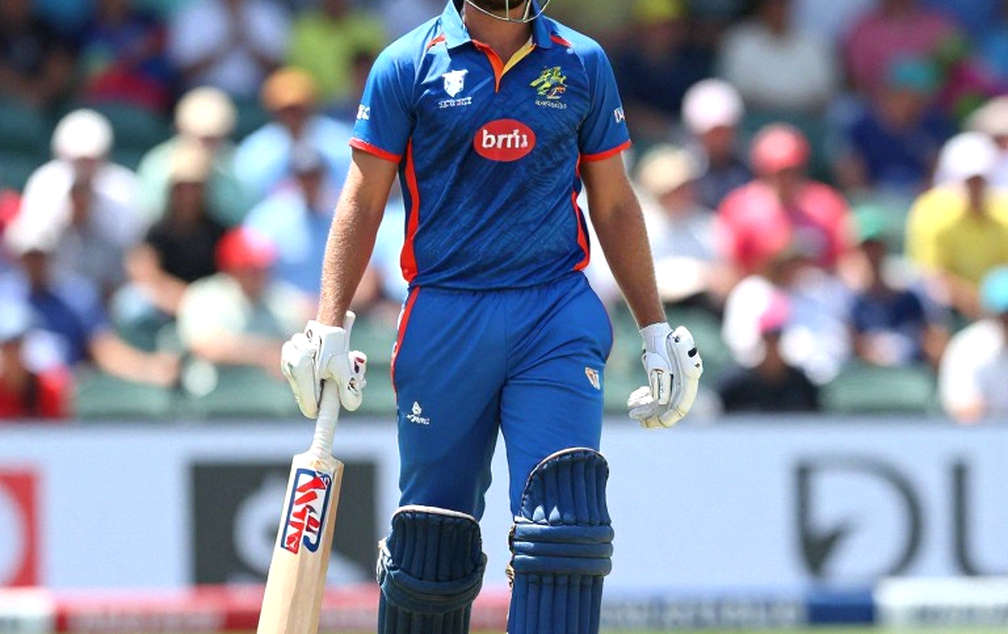
The innings did not begin the way host teams want. Maaz Sadaqat went for 5, Babar Azam for 0. The top three, added together, contributed five runs. After that Fakhar Zaman and Saad Baig held the innings together, and by 36.5 overs the side had reached 230 for 5. The report calls it a "daunting total" — a word, and the word belongs to the writer, not to the data.
And that is where the story is cut. The headline carries a completed claim — a series won — while the body stops at 36.5 overs, immediately after both set batters were dismissed. I have been in this trade for forty-one years; I know how this happens. Live copy is updated at eleven at night, the result comes in, the desk rewrites the headline, and the body stays where the last keystroke left it. The outcome runs ahead. The process is left behind.
None of this makes the news wrong. The trophy was probably won. My argument is with the scoreboard, not with a rumour. Three weeks is a long time to hold an unsourced sentence, and I have that patience; here I need three days, and an actual scorecard.
In the available report there is no target, no victory margin, no balls remaining, no toss, no weather, no Duckworth-Lewis reference, and — most striking of all — not a single figure from Pakistan's bowling. A match report in which the losing side's entire bowling effort is absent is not a record of the match. It is a record of one corner of it. I would call that a limit rather than a flaw, and conclusions should be drawn inside the limit.

That Lahore surfaces historically favour batting is general knowledge in this region. It is knowledge, not a data point from this match. It belongs in the inference column, not the fact column.
Core: the arithmetic of an innings, and what sits under it
Now to the innings that won it.
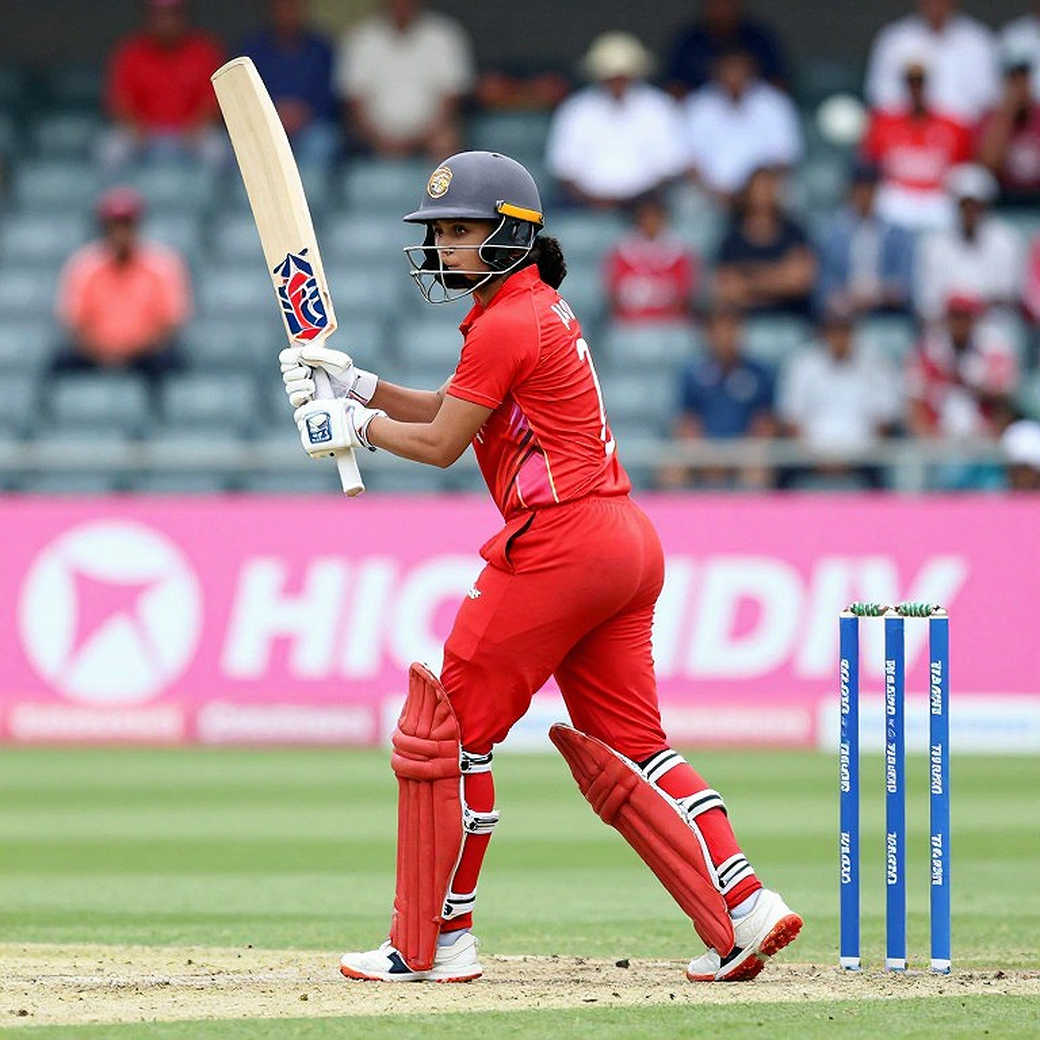
Fakhar Zaman: 127 off 99. Strike rate 128.3. Eleven fours and six sixes — 80 runs in boundaries. Seventeen of 99 balls were boundary balls, 17.2 per cent. The remaining 82 balls produced 47 runs, roughly 0.57 per ball.
This is not a rotation innings. It is a boundary-or-dot innings. Fakhar was not building with singles; he was leaving balls and putting the ones in his arc over the rope. A 63 per cent boundary share of runs sits above the modern ODI top-order band of 50 to 60 per cent. In a chase with a high required rate that profile is the most efficient one available, because a single delivery removes two or three overs of pressure.
The same profile carries its own risk. A boundary-based innings has a low floor. On a slower surface, or against a attack that takes pace off, the identical approach produces 47 rather than 127. The strength we saw is conditional on surface and situation. Filing it away as a permanent feature of Pakistan's batting would be haste.
This was his twelfth ODI century. Double-digit hundreds are a longevity signal, not a peak signal. Twelve hundreds say the man has produced across years in this format. They do not say he is at the top of his curve. On age — and here I state plainly that the birth date is unverified — he appears to be in the back half of his peak window. His value is likely to become increasingly format-specific: powerplay and middle-over aggression, not the long anchor innings.
Now Saad Baig. 74 off 75, strike rate 98.7, a maiden ODI fifty.
Structurally this innings tells us more than Fakhar's, even though it is smaller. A new batter scoring at roughly a run a ball inside a rebuild, without wasting deliveries, is evidence of temperament more than technique. The real examination for the second man in a partnership is whether he rotates strike or lets dot balls hold his own breath and the team's. Seventy-four off 75 means he did not hold it.
The caution stands. One innings, home ground, no detail on the quality of the bowling. I have watched for long enough to know how narrow the road is from one home fifty to a durable international place. When young players are picked for results, technique is left behind; when they are given a defined role, technique comes first. Which category Saad Baig has been placed in is not something this report tells us.
And here is the part without which the story is incomplete.
Maaz Sadaqat 5, Babar Azam 0. The top three, together: five runs.
A report that says Pakistan's batting "delivered on all fronts" is contradicted by the numbers inside the same report. The error does not belong to one writer; it belongs to the framing. The result was positive, so every component was assumed positive. The scorecard says the side needed a 128-strike-rate hundred and a maiden fifty from a newcomer to cover a five-run contribution from its top three. That is a picture of dependency, not of a balanced batting unit.
I do not treat Babar's duck as a form verdict. One zero, whoever scores it, is an event, not a conclusion. People who settle form from a single innings are really settling it from headlines.
One more absence in this section is large enough to note: Sri Lanka's bowling. Who was operating, which overs built pressure, where the scoring stopped — none of it. In the second viewing at one in the morning, the clearest thing was that five wickets had gone by 36.5 overs and both set batters were out. The lower order was at the crease with thirteen overs left and the heaviest part of the target still to get. The most tense passage of the match is the passage missing from the story.
I once cut a report to 450 words, and only then did the story stand up on its own. Cutting does not mean what was removed mattered less. It means what remained could stand alone. What remains of this match is the trophy; what was cut is those thirteen overs.
The contrarian read, after writing the strongest mainstream case
Before I go anywhere near a counter-intuitive conclusion, my own rule says I write the strongest version of the mainstream case first.
That version is this: home ground, a tri-series, a chase under pressure, two early wickets, and the side still reached a total the report calls daunting — built on a hundred struck at 128 and a composed maiden fifty from a young batter. From this it follows that Pakistan's batting has gears. It can change the shape of an innings under stress, and that capacity is arriving from younger players too. The top-order stumble is noise drowned by the sound of a win.
That argument passes the first test. The result is real, the trophy is real, and 127 was not a gift.
It fails the second test, because the five-run collapse occurred in the most helpful conditions on the calendar — own ground, own crowd, own surface. When a side gets five runs from its top three at home, the same collapse does not get covered away. The oldest deception in home data is this: it does not show improvement, it shows favourable conditions.
The second contrarian point is more uncomfortable. We cannot call this a dominant chase, because we do not know the target. We do not know the margin. We do not know how many balls were left. When the target is unknown, 230 for 5 is not a result; it is a pause. The "clinch" the headline announces comes from the desk, not from the scoreboard.
One quieter point deserves recording. This is not only a trophy for Pakistan. Staging and winning a multi-nation series in Lahore is evidence of the administrative and commercial capacity that home international cricket unlocks — broadcast inventory, ticketing, sponsorship all rest on the ground being full and the hosting being durable. There is no controversy here: no DRS dispute, no over-rate sanction, no code-of-conduct charge. A clean match, a clean report, and a large empty space where the target should have been.
Somewhere between the tunnel and the pitch, the truth changes clothes; and by the time it comes back from the scoreboard into the copy, the clothes have changed again.
Takeaway
Watch Pakistan's top-three aggregate across the next five ODIs. If it stays below 60 per cent of the team's runs, Lahore will prove to be a structure rather than an exception. Watch Saad Baig away from home and against good spin; a strike rate falling below 75 would reclassify him as a beneficiary of home conditions rather than a coming star. And for Fakhar, watch the boundary share on slower surfaces.
The trophy is on the shelf where it belongs. The question is narrower: a side that got five runs from its top three on its own ground — how much of that did it win, and how much did it survive?